
Who Will Carry Your Casket
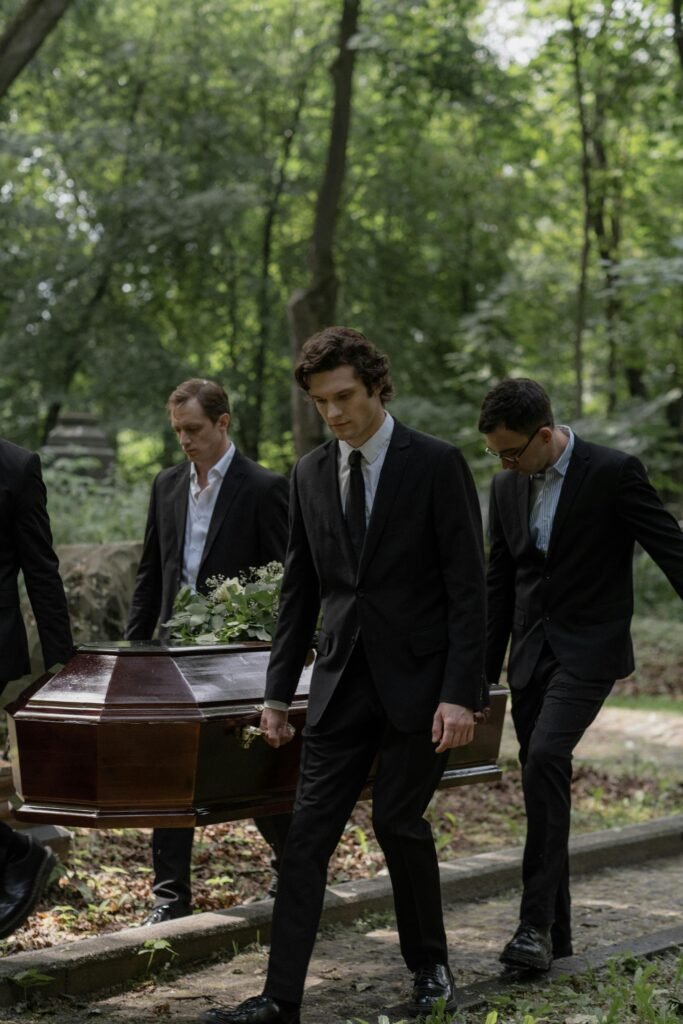
Who Will Carry Your Casket? In my years as a rabbi, I have presided over 500 funerals. I’ve stood graveside as men—sometimes six, sometimes eight, never fewer than four—took on the sacred task of carrying a brother to his final resting place. And I’ve seen the difference. Thanks for reading The Defiant Spirit ! Subscribe for free to receive new posts and support my work. Some men are carried by brothers—men who truly knew them, who stood beside them through battles, who loved them enough to grieve them. Others are carried by obligation—a last-minute hodgepodge of coworkers, distant relatives, and men who barely knew them beyond surface-level interactions. This isn’t just a logistical matter. It’s a spiritual reckoning. Why This Question Matters Because it’s not just about who will carry your body—it’s about who has carried your soul. A man’s funeral tells a story. Not just about how he lived, but about how he connected. About whether he had men in his life who truly saw him, who knew his battles, his joys, his pain. Or if he lived his life alone in a crowd, surrounded by people but never truly known. Too many men wake up one day and realize they are utterly alone. They have poker buddies, golf partners, colleagues to drink with. They have plenty of acquaintances but no true brothers. Then tragedy strikes—a death, a divorce, a crisis. And suddenly, they realize: “I have plenty of guys to grab a beer with… but no one to call at 2 AM when my world is falling apart.” And that’s a hell of a way to live. Because, in the end, it’s also how you’ll die. The Loneliest Generation of Men Men in the second half of life—40s, 50s, and 60s—are lonelier than ever before. And this isn’t just some vague cultural observation. It’s proven by data: A 2021 Harvard study on loneliness found that 61% of men feel lonely on a regular basis. A 2023 Gallup poll revealed that only 27% of men say they have six or more close friends, a steep drop from 55% in 1990. A 2022 Survey Center on American Life study found that 15% of men report having no close friends at all, up from just 3% in 1990. The former U.S. Surgeon General, Dr. Vivek Murthy, has called male loneliness an epidemic, warning that it has the same health risks as smoking 15 cigarettes a day. Think about that. Loneliness is as lethal as a pack-a-day smoking habit. And yet, we treat it like it’s no big deal. Steven Had 3,000 Friends—But No Brothers I once coached a man named Steven. Steven had everything a man is supposed to want—wealth, a thriving career, a wife, grown kids, and a full calendar of social events. On the surface, he was successful. He was the guy who knew everyone. The life of the party. The guy with 3,000 Facebook friends. But when his marriage hit a crisis and his father passed away in the same year, something hit him like a brick wall: “I have 3,000 Facebook friends… but not a single one I’d want to carry my casket.” He had men to drink with but no men to talk with.He had men to golf with but no men to go to war with.He had men to laugh with but no men to cry with. Steven wasn’t alone. He was lonely. And there’s a difference. From Meaning Counseling to Men’s Meaning Coaching For years, I worked in meaning counseling, helping people—men and women—discover their purpose and navigate life’s struggles. It was meaningful work. But something wasn’t clicking. I saw a pattern in men, especially those in the second half of life. They weren’t struggling with external success; they were struggling with inner emptiness. They had spent their lives climbing—career ladders, social ladders, financial ladders—only to reach the top and realize they were alone. And this is when a shift happens. Or at least, it should. The first half of life is about proving yourself. The second half of life is about leading yourself. It’s a moment when a man stops trying to impress and starts trying to build something real. It’s the moment a man must say the words every man needs to say: “King me.” Not in the childish, competitive sense of checkers, where you take power by jumping another man. No, this is something deeper. This is about becoming a king—a man who rules not over others, but over himself. But here’s the truth: A king without a kingdom is just a man on a throne with no one to lead, no one to serve, no one to stand beside him. And a lonely king is not a true king. Because a kingdom is not built on power—it is built on people. A king isn’t a king just because he holds the title. He’s a king because he has brothers, allies, warriors at his side. Men who will fight for him.Men who will tell him the truth.Men who will grieve him when he’s gone. Are you ready to take your place? Because if you are, it’s going to require love, devotion, support—the intimacy of other men. It’s going to require you to let other men in, to drop the armor, to build something real. It’s going to require you to stop pretending you can do this alone. Who Will Carry Your Casket? The next time you’re out with the buddies—at poker night, hunting camp, the golf course—pause for just a moment. Look around the table. Ask yourself: Would these men carry my casket? Not because they have to. Not because they’re obligated. But because they truly knew me, loved me, stood with me, fought for me. If the answer isn’t clear, then it’s time to start living differently. Because life isn’t measured by success, but by the men who will stand beside you when it all comes to an end. And when that day comes, will you have built a
KingMe: The Words Every Man Was Born To Speak

KingMe: The Words Every Man Was Born To Say There comes a moment in a man’s life when he realizes the script he’s been following no longer serves him. The chase for external validation, the relentless pursuit of success, and the pressures of being who the world expects him to be—it all begins to feel hollow. He stands at a crossroads, faced with a choice: continue playing by rules that no longer fit, or rise up and claim the role he was always meant to embody. King me. To be a king is not about dominance or control. It is about sovereignty—ruling over oneself with wisdom, integrity, and purpose. In a society that has misrepresented masculinity, the king archetype has been misunderstood, even vilified. But the issue isn’t that we have too many kings. The issue is that we have too few. Instead, we see men trapped in the roles of tyrants, cowards, manipulators, nice guys, or lost boys who never truly became men. The true king is different. He is not a slave to his ego or to the approval of others. He is a man who has faced himself, who has looked his fears, wounds, and weaknesses in the eye and emerged stronger. The first step toward kingship is awakening—recognizing that the old way no longer works and answering the call to something greater. The Second Journey Across the Board Life in the first half is like a game of checkers. It doesn’t appear that sophisticated. It doesn’t seem that profound. The rules are relatively simple: gobble up as much as you can, as quickly as you can. Get yours and get going. Most men spend decades in this mode, chasing achievements, collecting titles, accumulating wealth, proving themselves. And for a time, it works. Until it doesn’t. Until you realize that the game you’ve been playing doesn’t lead to victory—only exhaustion. Until you realize that following someone else’s script isn’t the same as writing your own story. Then something shifts. You make it to the other side of the board. And suddenly, the game changes. The way you move changes. The way you see the board changes. The man you are changes. This is the defining moment. King me. For those who make it through the game, to the other side, that’s when the shift presents itself. The rules that once mattered no longer do. The goals that once drove you no longer inspire. And the question that emerges isn’t about getting more—it’s about becoming more. It’s about stepping into a new way of living, one defined not by taking but by creating, not by proving but by knowing, not by following but by leading. Living as a King But what does it mean to be a king? A true king does not simply wear the crown—he carries the weight of it. Kingship is not about power for power’s sake, nor is it about being served. It is about service. It is about standing at the center of your own life, fully accountable, fully present, and fully engaged with your purpose. The defining difference between the first half of the journey on the way to that destination, and the second half on the way back across the board, are the rules. A king no longer plays by the rules of others—society, his friends, his contemporaries, even his family, his partner, his wife. As much as he loves and respects them, when a man says, King me, he loves and respects himself. He is his own sovereign. He answers only to a higher authority. And that’s what King me means. His rules. His goals. He moves in any direction he chooses. Those double-stacked checkers represent so much more than symbolism for a true king. They mark his transformation. He embodies Dr. Viktor Frankl’s driving thesis, summed up in the words: “The last of human freedoms, to choose one’s attitude in any given set of circumstances, to choose one’s own way.” A king chooses his own way. The world is filled with tyrants, cowards, manipulators, nice guys, and lost boys—men who never made the second journey across the board, who either refused the responsibility of kingship or corrupted it. A tyrant rules with fear. A coward hides from the call. A manipulator deceives to get his way. A nice guy pleases to avoid confrontation. A lost boy never grows up at all. But a king is different. The king’s role is to create, to lead, and to leave a legacy. He is a protector, a provider, and a builder—not only of wealth but of wisdom. He is a man who sees beyond his own needs and works to elevate those around him. The world does not need more tyrants, nor does it need passive men who shy away from responsibility. The world needs kings—men who understand that true leadership is about lifting others, not ruling over them. King me. Living as a king means making choices with clarity and conviction. It means having the courage to say no to what does not serve your purpose and yes to what aligns with your highest self. It means recognizing that life is finite and that the only thing that truly lasts is the impact you leave behind. This is your moment. The call has been made. The path is before you. Will you rise? Welcome to KingMe. This is where your true journey begins. — Dr. Baruch HaLevi is a therapist, coach, and guide for men who are ready to rise up and say those magical words: King me. Learn more at bhalevi.com.
Your Son is a Boy Because You’re Still Playing Games—Time to Be The King

Recently, I was counseling a woman whose son, in his early 20s, had just come home from college after graduating. He was living the stereotypical Gen Z life on the couch—a thousand reasons why he couldn’t make it in the world. The economy, the job market, his profession, even the Denver Broncos sucking—all excuses, none of which were his responsibility. Everything was external. He was a victim. He was powerless. And his mother was upset. But she wasn’t upset with her son. She was upset with her husband. Moms, Listen Up I know you love your boys. You’d do anything for them. But hear me when I say this: There’s only so much you can do to turn that boy into a man. You can nurture him, encourage him, support him—but you cannot teach him how to be a man. That’s not your job. That’s his father’s job. And if his father isn’t stepping up, then don’t be surprised when your son doesn’t either. Fathers—Wake the Hell Up It’s too easy to blame boys who should be men. In any other culture in human history, a 22-year-old was a man—making his way in the world, providing, procreating, and committing. But here we have a generation of grown boys—playing games, laying around, freeloading, consuming without contributing. And that’s not entirely their fault. Sure, they must take responsibility. But at the end of the day, someone allowed this to happen. And that someone was their father. The buck stops with YOU, Dad. You want your son to be a man? Then BE A MAN. A boy only knows how to grow into manhood when the man in front of him models it. If you want your kids to go to college, the number one thing you can do is go to college yourself. If you want your kids to stop smoking, the number one thing you can do is stop smoking. And if you want your sons to be men, the number one thing you must do is BE A MAN. The Couch May Not Be Under You, But It’s Stuck to You Because you see, his father may not have been living on the couch, but that couch was glued to his ass as he made his way through the world. He wasn’t physically lying around, but he sure as hell was mentally, emotionally, and spiritually checked out. He was a grown man playing the role of a boy—chasing distractions, indulging in endless entertainment, prioritizing his hobbies over his responsibilities. The Boy in a Man’s Body He spent more time scrolling social media than looking his son in the eye and having a real conversation. He knew every stat of his favorite sports team but didn’t know his son’s struggles, dreams, or fears. He showed up for his fantasy football league but not for the tough talks about life, responsibility, and purpose. He worked his ass off to provide a nice house, a nice car, and a nice bank account, but he didn’t provide leadership, wisdom, or presence. He talked about “back in my day” but never stepped up to show his son what being a real man looks like today. And then, he had the nerve to wonder why his son didn’t step up. Respect Must Be Earned As I say to my son all the time, “My love for you is unconditional, but my respect needs to be earned.” And it’s a two-way street. I don’t know if my son’s love for me is unconditional. I don’t think it needs to be. But I do know his respect for me, just as it should be for any person, is conditional. It’s conditioned upon what I do. And what I do must be to provide for him—not just financially, but spiritually, emotionally, and ethically. Do the Hard Work And that means: Having the hard conversations. Going deeper. Taking on the taboo, the tough, and the touchy issues. Calling out bullshit when you see it. Holding your son accountable. ABOVE ALL—modeling the behavior yourself. Time to Rise Up Enough with the excuses. Enough with the Peter Pan bullshit—flying around Neverland, running with the Lost Boys. Enough with the passive fatherhood, thinking that providing a paycheck is enough. Your son is watching you. He is learning from you. The only question is—what the hell are you teaching him? It’s time to rise up. Be the King. And what does that mean? How do you do it? That’s exactly what we’ll tackle in the next blogs. Because this isn’t just a rant. It’s a call to action—a call for all my midlife brothers to rise up and become the King. Dr. Baruch “B” HaLevi is a Kingmaker—not the traditional kind who bestows titles, but one who forges men in the fire of transformation. As a therapist, coach, and guide, he walks alongside men on their journey to reclaiming their power, purpose, and rightful place as Kings. To learn how to step into your own Kingship or work with B, visit DefiantSpirit.org.
Who Was That Masked Man?

Who Was That Masked Man? A Callout to Every Lonely Ranger The Bullshit Myth of the Lone Ranger Growing up, The Lone Ranger was the man. Strong. Silent. Unstoppable. He rode in, handled his business, saved the day, then vanished before anyone could even thank him, leaving them asking, “Who was that masked man?” And just like every other boy watching, I thought, That’s who I want to be. The man who needed no one. The man who had it all under control. The man who never showed weakness. And that’s the lie we’ve been sold. That a real man never asks for help. That emotions are a liability. That solitude is strength. It’s all a con. Because the truth is, the Lone Ranger isn’t free. He’s alone. The Man Who Became the Mask Joe had everything a man is supposed to want. The title. The money. The respect. He was the guy other men envied. But late one night, after the deals were done, after the last handshake and the last fake smile, my phone rang. It was Joe. His voice was shaking. After our first coaching session, I gave him an assignment—Mirror Moments. “Go to the mirror,” I told him. “Look. Really look. And tell me what you see.” The next time we talked, he hesitated. “I tried,” he said. “I stood in front of the mirror, and I couldn’t do it. I couldn’t even look at myself. I don’t know who I am anymore. I feel like I’ve been playing a role my entire life. I built this image, but now I’m staring at my own reflection, and I don’t recognize the guy looking back. And worse? I don’t respect him.” That was the moment Joe realized he wasn’t the Lone Ranger—he was the Lonely Ranger. He’d worn the mask for so long, he became it. The powerful man. The untouchable leader. The guy who never faltered. He convinced himself and everyone around him that he had it all under control. But inside, he was falling apart. The long nights alone. The silence that stretched forever. The creeping doubt that everything he had built—his career, his reputation, his image—was just a shell. That the mask he wore to impress the world had turned into a prison. And like so many men, he had no idea how to take it off. Every Man Wears a Mask Joe’s story isn’t unique. It’s every man’s story. We are raised to be warriors. To tough it out. To push through. To never, ever let them see us sweat. From the time we are boys, we are told that vulnerability is dangerous, emotions make us weak, and that real men stand on their own. So we adapt. We armor up. We wear the mask. The mask of success. The mask of strength. The mask of confidence. The mask of control. And then, one day, if we’re lucky—or if life knocks us hard enough—we look in the mirror and realize we’re lost. The Problem Isn’t the Mask—It’s Forgetting Who You Are Beneath It Most men don’t even realize they’re wearing a mask. We put it on so early, it becomes second nature. It becomes who we think we are. At first, it works. It keeps us moving. It helps us win. It shields us from judgment, rejection, and pain. Until one day, it doesn’t. Until one day, we wake up and realize the mask that once protected us is now suffocating us. The Work of Taking Off the Mask Every man will face this moment. And when he does, he has two choices—keep pretending, or do the hard, brutal, liberating work of taking the mask off. That’s why I work with men in midlife. Not kids. Not boys still trying to figure it out. Men. Men who have built something, who have earned their scars, who have chased success only to realize that all the money, all the power, all the status—none of it means a damn thing if they don’t even know who they are. Some come to me shattered, desperate to find the man behind the mask. Others arrive exhausted, knowing they can’t keep playing this role. And some are just waking up to the truth: the mask they thought made them strong has actually made them a prisoner. I don’t work with men to fix them—because they were never broken. I work with them to burn the mask to the ground. To stop hiding. To face the fears, the failures, the regrets. To stand, fully exposed, in the raw, unfiltered truth of who they are. And I’ve seen it happen. I’ve watched it in real time—the moment a man rips off his mask and breathes for the first time in years. The weight lifts. The loneliness fades. The pretending stops. No more lonely rangers. No more men disappearing behind a lie. No more ever hearing those dreaded words uttered about you— Who was that masked man? Dr. Baruch B. Halevi is a logotherapist, men’s coach, and guide, working with men in midlife and beyond to burn the mask, find deeper meaning in their lives, and rise up and become the king and rule their kingdom.
Understanding Your Enneagram Type and Transforming Your Reactions
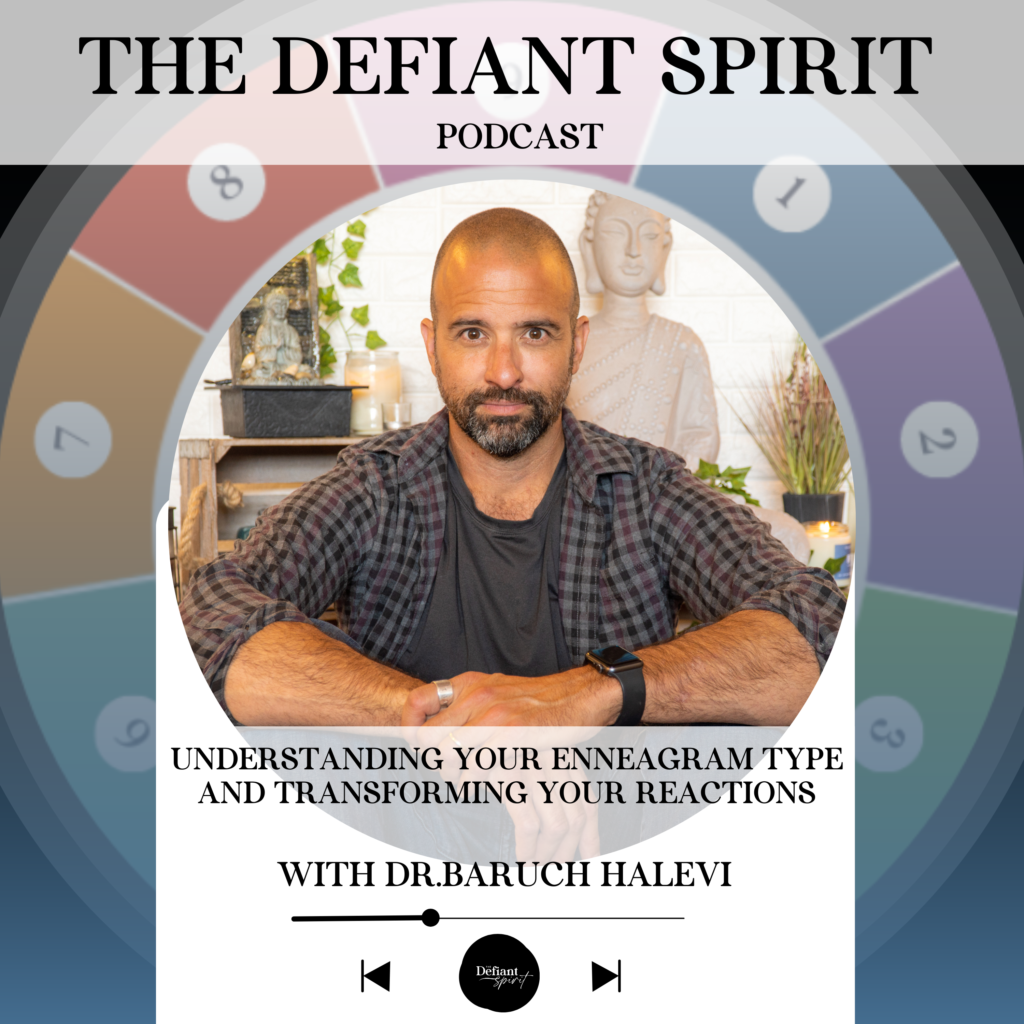
https://www.youtube.com/watch?v=wCqKzJksEnY&t=5s In this episode, we dive deep into the Enneagram and how understanding your type can help you navigate emotions, relationships, and personal growth. We explore the power of recognizing your core motivations, particularly through the lens of Type Eight (The Challenger) and Type One (The Reformer). By examining the role of anger and control, we uncover practical ways to harness these emotions rather than be controlled by them. Key Takeaways: Knowing Your Why: Understanding your deeper motivations helps you navigate challenges with clarity. The Iceberg Analogy: 90% of who we are lies beneath the surface, influencing our reactions in ways we may not realize. Anger as a Tool: Eights express anger outwardly, while Ones tend to repress it, but both can harness it for personal growth. Reaction vs. Response: By creating space between a trigger and reaction, we gain the power to choose our response. Persona vs. True Self: The Enneagram helps us differentiate between the masks we wear and our authentic selves. The Power of Awareness: Recognizing emotional patterns allows us to break free from automatic reactions. Notable Quotes: “If I know my why, I stop focusing on the surface.” “Anger isn’t good or bad; it’s how we use it that matters.” “Understanding our Enneagram type helps us step back and watch our reactions instead of being consumed by them.” “The antidote to being stuck in your type is often written within the Enneagram itself.” Practical Applications: Journal about moments when you felt triggered and analyze the deeper motivation behind your reaction. Identify a type that challenges you and try to understand their perspective using the Enneagram framework. When strong emotions arise, pause and ask yourself: Is this reaction serving me or limiting me? Experiment with “faking” traits of another type to break out of automatic responses. Resources Mentioned: The Enneagram as a tool for personal growth and self-awareness. The Jewish perspective on self-identity and the power of “I am.” How historical figures like Martin Luther King Jr. and Gandhi harnessed their emotions for a greater purpose. Final Thoughts: Self-awareness is the first step toward transformation. The Enneagram provides a roadmap to better understand ourselves and others, allowing us to move from reactive patterns to intentional responses. Whether you’re an Eight, a One, or any other type, the journey to self-mastery starts with observing, understanding, and ultimately embracing the strengths and challenges of your personality. == Join our Own Your Number Enneagram Program just for 98$, and well, own your relationships. Check out here: https://ownyournumber.bhalevi.com/pages/home 🔔 Stay Connected: Follow us on Instagram: https://www.instagram.com/baruch_halevi/ Join our Facebook community: https://www.facebook.com/TheDefiantSpirit #Enneagram #EnneagramType #EnneagramTest #Man #Men #DefiantSpirit #DrBaruchHaLevi #Communication #PersonalDevelopment #PersonalGrowth #SpiritualGrowth
Why Men Don’t Need To Fix Everything

Why Men Don’t Need to Fix Everything: The Power of Patience and Holding Space Growing Up Without Fixing I didn’t grow up in a home where we fixed things. If something broke, we called someone. We paid someone. And then we moved on. There was no learning curve, no lessons in repair, and no sense of accomplishment from solving a problem. We outsourced the inconvenience and moved on with our lives. Learning to fix things as an adult has been empowering. Just the other day, I repaired a door frame my dog had chewed up. It wasn’t perfect, but it felt good. There was a problem, I solved it, and it was done. Fixing things gives closure, a sense of control. But not everything in life can be fixed. Not everything is meant to be fixed. And that’s a hard truth to accept—especially for men. When Fixing Isn’t the Answer My youngest son struggles to fit in. He’s sensitive, thoughtful, and emotionally deep. He’s a dancer surrounded mostly by girls and doesn’t know how to connect with the boys. Middle school is brutal. For a boy who doesn’t fit the mold of “one of the guys,” it can be isolating and painful. Watching him struggle, my first instinct was to fix it. I met with teachers and guidance counselors, trying to change the context. I taught him strategies to navigate social situations. I searched for that magic tool to take away his pain. But nothing worked. I desperately wanted to take away his suffering. I wanted him to feel accepted and safe. But I couldn’t fix it. It wasn’t mine to fix. It was his. That’s when I realized that what he needed wasn’t a solution. He needed me to listen. To be present. To hold space for his pain without trying to take it away. This realization was as freeing as it was painful. It required me to set aside my need to fix and instead just be there, fully present with his struggle. When My Son Cried, I Wanted to Fix It As my son sat on his bed, tears streaming down his face, everything in me wanted to make it better. I wanted to fix it. I wanted his pain to go away. I wanted to protect him, to fight his battles for him, to do whatever it took to stop his suffering. But I couldn’t. Because it’s not mine. It’s his. In that moment, I realized the most loving thing I could do was to sit there with him. To hold his suffering, not to take it away but to carry it with him. Withholding the urge to fix it was one of the hardest things I’ve ever had to do. It took tremendous willpower not to swoop in and make it all better. But that was my act of service. That was my act of love. By holding space for his suffering, I was empowering him to face his pain, to learn how to bear his own burdens, to grow strong enough to carry them. I wasn’t saving him. I was loving him. And sometimes, that’s the hardest thing to do. Patience: An Act of Love The word patience comes from the Latin pati, which means suffering. Patience is about bearing the burden of someone else’s pain without trying to take it away. True masculinity isn’t about fixing or solving. It’s about holding space. It’s about allowing others to struggle, grow, and find their own way. That takes strength. It takes courage. It’s an act of love. It’s about learning to hold suffering—for yourself and for those you love. To bear the burden without needing to take it away. To allow others the space they need to work through their own struggles, to find their own solutions, to become resilient. That’s what true men do. They hold the suffering. They bear the burden. They don’t try to solve what isn’t theirs to solve. They stand beside those they love, offering presence, not answers. It’s the harder path but the truest expression of love. Bearing the Burden as an Act of Love It takes strength to carry someone else’s pain without needing to remove it. It takes courage to be present with someone in their suffering without trying to solve it. This is not weakness; it is an act of love. When we bear the burden of another’s pain, we are saying, “I see you. I hear you. And I am here with you.” We are giving them the greatest gift of all—our presence. It’s tempting to fix because fixing is action. It feels productive. It makes us feel useful, needed, and competent. But when we try to fix what is not ours to fix, we rob the other person of the opportunity to grow, to learn, and to become resilient. We deny them the gift of their own struggle. We take away their agency. Holding space is not passive. It is the most active form of love there is. It requires strength, patience, and humility. Patience becomes an act of service. Suffering becomes an act of love. And the presence we offer becomes the greatest gift we can give. Man Uprising: Bearing the Burden Together This is a fundamental principle in Man Uprising Peer Groups. We do not tell each other what to do. We do not fix each other’s problems. Instead, we come together to go deeper into ourselves and rise up in the second half of life. We share our experiences, our struggles, and our victories. We hold space for one another, listening as an act of love, bearing the burden together. We understand that true strength isn’t about fixing each other. It’s about standing shoulder to shoulder, holding the suffering, and walking through it together. This is how we serve. Not by solving. Not by saving. But by showing up. By being there. By loving each other enough to let each man find his own way. This is what it means
Let Them: Ancient Wisdom on Letting Go and Choosing Response

Let Them: Ancient Wisdom on Letting Go and Choosing Response Three times last week, someone asked if I’d read Mel Robbins’ newest book, Let Them. Fine. I’m not a huge fan of self-help books, but fine—I said I’d read it. It was a nice read. Nothing earth-shattering, just a simple idea. I’ll save you the time and money in seven seconds: If the cashier is annoyingly slow… Let them. If your kid is bitching about whatever they’re bitching about this time… Let them. If your spouse is upset with you—again—for whatever reason… Let them. Let Them is about letting go of control. Let Them is about taking back your power. Let Them is about living with more joy and freedom. The book resonates because we know it’s true. Deep down, we’ve all felt the frustration of trying to change someone—trying to make them see, make them do, push them toward what we know is best—only to watch them resist, ignore, or walk the other way. I certainly have. As an Enneagram 8, The Challenger, I’ve spent my life taking control, staying in control, or forcing control over everything and everyone in my path. And yeah, I get a lot of shit done. I’ve made some impact. But at what cost? A hardened persona.A heated temperament.And—if you ask my wife—more than a few years as, and I quote, The 8-hole. (Okay, fine, she still calls me that. Just way less.) But age brings perspective. And failure. A lot of failure. Enough to teach me that control is a losing game. Sure, I can push my kid to do his homework, but does it work?I can be upset when my coworker doesn’t pull their weight, but does my anger fix it?I can get mad when the driver in front of me is crawling at 10 mph, but does it make them speed up? Mel’s right: What’s the point? You can’t change them.You can’t change reality.You aren’t in control of them. Hell, you aren’t even in control of yourself—not if they’re the ones pulling your strings. This Isn’t New. It’s Ancient. This isn’t Mel Robbins’ idea. It’s the idea—the foundation of entire wisdom traditions. Buddhism? The Buddha taught: “Attachment is the root of suffering.” Clinging to the illusion of control—believing people should act how we expect—is a direct path to frustration and pain. The solution? Let them. Hinduism? The Bhagavad Gita reminds us: “You have a right to your actions, but never to the fruits of your actions.” Do your part, but let them do theirs. Kabbalah? It speaks of Tzimtzum—the radical idea that even God, in infinite power, made space for human free will. If the Divine allows us to choose, who are we to force our will on others? And then there’s Viktor Frankl. He didn’t just study this idea. He lived it in the most unimaginable conditions. Expanding the Space: Viktor Frankl & Response-Ability In the depths of the Holocaust—where every external freedom was stripped away—Viktor Frankl uncovered the ultimate truth: “Between stimulus and response, there is a space.In that space is our power to choose our response.In our response lies our growth and our freedom.” Frankl called this our response-ability—the ability to choose our response. That space—between what happens to us and how we react—is all we truly own. Yet most of us waste our energy trying to control everything outside that space—other people, circumstances, the world—while neglecting the one thing we actually can control: our response. That space is where we reclaim our power.That space is where we expand our freedom.That space is where we stop reacting and start responding. A Real-Life Example: The Power of Letting Go A coaching client of mine—a deeply compassionate woman—wrestled with this lesson. She wanted to help. Her kids. Her husband. Her siblings. Her friends. She poured herself into their problems, offering advice, solutions, support. But the more she “helped,” the more aggravated she became when they didn’t take her advice. Why wouldn’t they listen?Why wouldn’t they change? She was exhausted, resentful, heartbroken. Then came the breakthrough: She realized she could not make them change.She could only change herself. She could let them—Let them make their own choices.Let them experience their own consequences.Let them take ownership of their own lives. And in doing so, she found peace. Reclaim Your Response-Ability Ask yourself: Do you want to live in constant reaction—frustrated, exhausted, resentful because people aren’t doing what you want? Do you want to be trapped in an endless loop of trying to manage the uncontrollable? Or do you want to expand the space—take back your power, choose your response, and be free? You cannot control them.You cannot control circumstances. But you can control your response. That’s your response-ability. And when you claim it, you become free. Let them.
Worn-Out Erasers, Sharpened Pencils & The Dancing Defiant Spirit

Worn-Out Erasers, Sharpened Pencils & The Dancing Defiant Spirit Lessons In Resilience and Grit From My Son, Aviv Every morning, I come downstairs to the same sight: pencils strewn across the desk in the family office. But there’s something about these pencils—none of them have erasers. They’ve all been worn down to the nub. And invariably, my son Aviv’s math work is buried beneath a dusting of pink eraser shavings. He’s in seventh grade. He gets good enough grades—except in math. Because math is his personal hell. Aviv is dyslexic, and numbers simply do not click for him, no matter how hard he tries. Every equation, every word problem, every test is a battle. And every morning, when I see those pencils with their erasers ground to dust, my heart holds two things at once: sorrow and gratitude. Sorrow, because I know how hard he struggles. I know the long hours, the frustration, the fight against that voice in his head telling him he’s not enough, that he’s stupid, that he doesn’t have anything to offer the world. I know how much it costs him to sit there and erase, and erase, and erase—working through problems over and over, only to still get the answer wrong. But also, gratitude—because every morning, there’s another pencil without an eraser. That means he’s still fighting. He hasn’t given up. He sits in his personal hell, erasing and trying again, erasing and trying again. He refuses to surrender. And in that refusal, in those countless hours of rewriting and erasing and trying again, something remarkable is happening. Aviv is being shaped—not into a great mathematician, but into something far more important: a man of resilience, a man of wisdom. Viktor Frankl and the Inner Concentration Camp My teacher and mentor, Dr. Viktor Frankl, called this the inner concentration camp—not a term he used lightly, having endured four years in a Nazi concentration camp. He knew that, while most of us will never experience something as horrific as the Holocaust, we will all face our own version of captivity—the inner darkness, the suffering that feels inescapable, the daily battle we must fight to maintain our dignity, our will, our defiant spirit. For Aviv, that inner concentration camp is math. It’s the mental processing that doesn’t come easily. It’s the way our society demands and shames him into conforming to a system that wasn’t built for him. I’d be lying if I said he has made peace with it. He hasn’t. He hates it. He struggles with it. But every morning, once again, there are more eraser bits all over the desk. And that means he’s still showing up. Life’s Curriculum We don’t get to choose our curriculum in this life. If we did, Aviv wouldn’t have chosen dyslexia. He wouldn’t have chosen math. He wouldn’t have chosen the frustration, the hours of trying and failing, the tears and the self-doubt. But this is the curriculum he was given. And he is doing the work. Each of us has a curriculum—our own set of struggles, our own erasers worn down to nothing. Some of us were given loss. Some were given failure. Some were handed the weight of addiction, heartbreak, betrayal, trauma. We didn’t sign up for it. But we are in the classroom nonetheless. And there’s a choice to be made. We can resist it. We can rage against it. We can sit in bitterness, wishing for a different syllabus, demanding an easier path. Or we can do the work. We can pick up the pencil, erase, try again. Erase, try again. Not to master the subject—but to master ourselves. The Wisdom of the Body In our world, intelligence is worshipped. Our education system, our culture, our values—they are all built around what happens between our ears. But there is another kind of wisdom, an ancient wisdom, one we have forgotten in the modern age. The wisdom of the body. And that is where Aviv shines. While math is his battleground, dance is his sanctuary. He’s been dancing for ten years. Competitive dance. Hours and hours of training, late nights, weekends filled with rehearsals and competitions that stretch from morning to night. And here’s the thing—no one has to push him to do it. No one has to tell him to practice. No one has to remind him to show up. Because on the dance floor, there are no worn-out erasers. There is only a sharpened pencil. Up there, he is beyond numbers. He moves with an intuitive rhythm, a precision that can’t be captured in a formula or measured by a test. He executes intricate choreography with the kind of poise and control that defies his struggles with math. While numbers confine him, dance frees him. And he’s not just good. He’s great. He wins competitions. He earns the respect of his peers and coaches. He pushes himself, refines his movements, perfects his craft. Because on stage, he isn’t battling dyslexia. He isn’t erasing mistakes. He is creating something beautiful. And yet, those hours spent wrestling with math problems are not in vain. Because while he may never conquer algebra, he is learning something far more valuable—grit. Persistence. Emotional depth. The ability to feel his frustration, to name it, to process it, and to keep going anyway. We All Have Our Worn-Out Erasers Each of us has our version of Aviv’s math work. The thing that breaks us down, that makes us question ourselves, that asks us, Do you really want this? For the men I coach, it might be rebuilding a life after divorce. It might be wrestling with failure, regret, loneliness. It might be facing a painful truth about who they’ve been and who they want to become. But those worn-out erasers are proof of the work. They are evidence that we are showing up, erasing, trying again. And the goal is not to erase forever. The goal is to one day pick up the sharpened pencil and write—not with hesitation,
Men and Mastery: Your Why is Bigger Than Your Work, Bank Account, or Success

Men and Mastery: Your Why is Bigger Than Your Work, Bank Account, or Success Your Why is Not Just Your Work Lately, I’ve been talking a lot about knowing your why—your purpose. Not just in one area of life, but in all areas of life. Because as my teacher and mentor Viktor Frankl said: “He who has a why to live for can bear with almost any how.” But here’s the problem. Too many men think their why is their work. Their business. Their career. Their empire. And while your professional why matters, it’s only one piece of a much bigger picture. The Empire That Crumbles at Home A man walks into my office. I do a lot of men coaching—or as I sometimes call it, meaning coaching—helping people in general, and men in particular, dig into their lives to discover, articulate, and live their why. This guy? A powerhouse. He’s built an empire. Runs a multi-million-dollar company. Measures his worth by the size of his business, his bank account, his portfolio. (Men are obsessed with the size of their empire.) Just ask him—he’ll tell you. He’ll also tell you he’s the smartest guy he knows. And when it comes to finance and numbers? He probably is. That’s why he has the corner office in the C-suite. But as Socrates reminds us: “Being highly skilled in one area does not mean you possess wisdom in all.” Mastery in one domain does not make you a master in others. In fact, it can blind you. Because while this man has everyone answering to him at work, while everything in his professional life runs like a well-oiled machine, the moment he pulls into his garage and steps into his kitchen… He plummets. From master to mediocre. From being in charge to, at best, a second-class citizen. At worst? An unwanted outsider. He feels estranged from his kids. Distant from his wife. The Why That’s Missing But B, he tells me, I’ve spent my lifeblood building this empire. Achieving mastery—all for them. So they never have to want. So they have everything they need. The vacations, the private schools, the cars, the homes—whatever they want, they’ve got it. And all the while, he believes his own bullshit. He’s told himself the story for so long, he thinks it’s true. But what his family really needs isn’t more professional mastery. They don’t need more money. They need him. They need him to master the other arenas of his life. They need him to master being a father. A husband. A man with a deeper why. So I ask him: “Joe”—changing his name to protect the innocent—”What’s your personal why?” No hesitation when it comes to his company. He’s read Simon Sinek. He knows the drill. He can articulate his company’s why like a well-rehearsed investor pitch. Boom, boom, boom. Then I ask again: “But Joe, what’s your personal why?” And the man who has mastered his industry sits there, blank. No more mastery. Because no one’s ever asked him that question before. Because he’s never asked himself. Because he simply does not know his why. Your Why is Bigger Than Your Career Every man needs a why. Yes, literally—to recite every day, to ground yourself, to keep you anchored when life gets messy. But also figuratively—as the internal compass that moves you toward holistic mastery. Most men have only been taught to master one domain: Professional Success. But true mastery requires four domains: The Four Domains of True Mastery Professional Mastery – Your work, your career, your ability to provide. Personal Mastery – Your own well-being: body, mind, and spirit. Family Mastery – Your relationships: spouse, children, loved ones. Community Mastery – Your impact beyond yourself: legacy, service, purpose. These are the four buckets we focus on in Man Uprising peer groups. And when men check in at our meetings? Their seven-minute update is always in descending order of mastery: First, professional—where they thrive. Then, personal—where they struggle. Then, family—where they feel lost. And finally, community—where there’s often nothing at all. It’s not just a descending order of mastery. It’s an ascending order of neglect. A Why That Covers Every Domain Men in midlife are being called to rise up—to become the king, the patriarch, the source of certainty and security for all four domains. Professional – Yes, but not at the expense of the others. Personal – Yes, because if you’re not taking care of yourself, you can’t take care of anyone else. Family – Absolutely, because your wife and kids don’t need a paycheck. They need a present man. Community – The most neglected bucket of all. But as Viktor Frankl calls it, self-transcendence—the need to contribute to something bigger than yourself. Why Do You Get Up in the Morning? Men, we are not here to just master one domain while letting the others collapse. We are not here to just make money. Money is a means, not an end. We are not here to just succeed in business while failing at home. We are here to master ourselves. To build holistic success. To ensure that, at the end of our lives, we don’t just leave behind a bank account—but a legacy. What’s Your Why? Because if you don’t know it, you’ll never be the man you were meant to be. Simon Sinek was right. It all starts with why.
Why Haven’t You Killed Yourself? A Powerful Call for Men to Discover Their Why

Why Haven’t You Killed Yourself? A Powerful Call for Men to DiscoverTheir Why Suicide Is Not Painless: A Reflection on Why We Stay In recent weeks, a series of suicides has profoundly impacted the lives of men I know, love, and guide. Each loss has been a man, each one overwhelmed by the unbearable weight they carried in silence—a stark reminder of the hidden battles so many men endure. These heartbreaking moments highlight the urgent need to confront this silent epidemic and emphasize the critical importance of helping men uncover their why—their reason to hold on, persevere, and move forward. For me, this crisis is deeply personal. Eighteen years ago, my father became one of those men. He chose to leave this world by suicide, believing—perhaps desperately—that it was a painless solution to the chaos he felt consumed his life. But if there is one thing I know for certain, it’s this: suicide is not painless. Not for the one who chooses it. Not for the loved ones left behind. It’s an act that leaves a profound wake of pain, questions, and unfinished business. What pains me most is that there was a way forward for my dad. It wasn’t suicide—it was his why. If he could have found it, held it, and let it guide him, he might still be here. This blog isn’t just about my father’s choice. It’s about why we stay. Why we endure. And what we can learn from the darkness that sometimes beckons us. A Drive Down Memory Lane Recently, I was driving from Denver to Sedona for a weeklong trip with friends. As is my custom, I spent the hours listening to books and meaningful music. Somewhere past Santa Fe, I felt a sudden urge to revisit my father’s favorite TV show, MASH. The satirical war comedy, which he adored for its dark humor and biting commentary, often felt like an extension of his personality. Instead of watching an episode, I queued up the show’s iconic theme song. Normally, when I want to feel close to my dad, I turn to Motown, but that day I needed something different. The haunting, nostalgic instrumental filled my car. For a moment, it was like stepping back in time. Then the lyrics started. The Song That Stopped Me Cold For those unfamiliar with the MASH theme, its original version wasn’t just an instrumental—it had lyrics. Dark lyrics. As I listened, I found myself stunned: “Suicide is painlessIt brings on many changesAnd I can take or leave it if I please.” The song continues with an equally chilling conclusion: “…And you can do the same thing if you please.” The words felt surreal, almost absurd. How could a theme song for a comedy about war carry such a message? I pulled over and searched for an explanation. I learned that the lyrics were written for the MASH movie as satire, a commentary on the absurdity of war and the human condition. But satire or not, the words hit me like a freight train. My father had believed those words—or at least something like them. He thought suicide could be an “elegant” exit, a way to leave behind the pain he couldn’t resolve. I had begged him not to follow that path, especially after witnessing the devastation his mother’s suicide caused him decades earlier. Yet, in his final act, he did exactly what she had done. Retracing His Steps As I drove past Santa Fe, I thought about my father’s journey and the choices he made. He spent his final days searching—searching for peace, for meaning, for answers—but ultimately, he didn’t find them. What he needed wasn’t in the retreat centers he visited or in the external fixes he sought. It was inside him all along. What my dad needed was a community where he could share his struggles, a space to explore his why, and the courage to uncover the purpose that could have guided him forward. Why Haven’t You Killed Yourself? In my work as a coach and guide for men navigating the second half of life, I often reflect on a startling question posed by Viktor Frankl, the Holocaust survivor and psychiatrist who has profoundly shaped my thinking. Frankl would ask his patients: “Why haven’t you killed yourself?” At first glance, it sounds shocking, even cruel. But Frankl understood that in our darkest moments, the most important question we can ask ourselves is why. Why are we still here? What tether keeps us connected to life? What gives us meaning? Frankl believed, as do I, that finding your why—your reason for being—can help you endure almost any how. It can transform tragedy into triumph and despair into purpose. For me, my why has become clear: to help other men avoid the path my father chose, to guide them toward meaning, connection, and hope. Man UPrising Peer Groups: A Movement Toward Meaning This drive wasn’t just a personal journey through grief—it was also a reminder of why I am so passionate about Man UPrising Peer Groups. These groups exist to create exactly what my dad didn’t have: a space where men can come together, break their silence, and confront the hard questions. In these groups, men support each other in exploring their purpose, their meaning, and their why. It’s about connection, vulnerability, and rising together—something no man should have to do alone. The truth is, suicide isn’t just about death. It’s about the disconnection, isolation, and despair that lead to such a decision. But I believe there is another way. Through peer groups, men can find the strength to move forward, not in spite of their pain, but because of it. Together, we create a foundation for healing and growth that allows men to thrive in ways they might never have imagined. The Truth About Suicide If my father could hear me now, I’d tell him what I wish he had understood: suicide is not painless. It is not an elegant solution. It is darkness