
Why Haven’t You Killed Yourself? A Powerful Call for Men to Discover Their Why

Why Haven’t You Killed Yourself? A Powerful Call for Men to DiscoverTheir Why Suicide Is Not Painless: A Reflection on Why We Stay In recent weeks, a series of suicides has profoundly impacted the lives of men I know, love, and guide. Each loss has been a man, each one overwhelmed by the unbearable weight they carried in silence—a stark reminder of the hidden battles so many men endure. These heartbreaking moments highlight the urgent need to confront this silent epidemic and emphasize the critical importance of helping men uncover their why—their reason to hold on, persevere, and move forward. For me, this crisis is deeply personal. Eighteen years ago, my father became one of those men. He chose to leave this world by suicide, believing—perhaps desperately—that it was a painless solution to the chaos he felt consumed his life. But if there is one thing I know for certain, it’s this: suicide is not painless. Not for the one who chooses it. Not for the loved ones left behind. It’s an act that leaves a profound wake of pain, questions, and unfinished business. What pains me most is that there was a way forward for my dad. It wasn’t suicide—it was his why. If he could have found it, held it, and let it guide him, he might still be here. This blog isn’t just about my father’s choice. It’s about why we stay. Why we endure. And what we can learn from the darkness that sometimes beckons us. A Drive Down Memory Lane Recently, I was driving from Denver to Sedona for a weeklong trip with friends. As is my custom, I spent the hours listening to books and meaningful music. Somewhere past Santa Fe, I felt a sudden urge to revisit my father’s favorite TV show, MASH. The satirical war comedy, which he adored for its dark humor and biting commentary, often felt like an extension of his personality. Instead of watching an episode, I queued up the show’s iconic theme song. Normally, when I want to feel close to my dad, I turn to Motown, but that day I needed something different. The haunting, nostalgic instrumental filled my car. For a moment, it was like stepping back in time. Then the lyrics started. The Song That Stopped Me Cold For those unfamiliar with the MASH theme, its original version wasn’t just an instrumental—it had lyrics. Dark lyrics. As I listened, I found myself stunned: “Suicide is painlessIt brings on many changesAnd I can take or leave it if I please.” The song continues with an equally chilling conclusion: “…And you can do the same thing if you please.” The words felt surreal, almost absurd. How could a theme song for a comedy about war carry such a message? I pulled over and searched for an explanation. I learned that the lyrics were written for the MASH movie as satire, a commentary on the absurdity of war and the human condition. But satire or not, the words hit me like a freight train. My father had believed those words—or at least something like them. He thought suicide could be an “elegant” exit, a way to leave behind the pain he couldn’t resolve. I had begged him not to follow that path, especially after witnessing the devastation his mother’s suicide caused him decades earlier. Yet, in his final act, he did exactly what she had done. Retracing His Steps As I drove past Santa Fe, I thought about my father’s journey and the choices he made. He spent his final days searching—searching for peace, for meaning, for answers—but ultimately, he didn’t find them. What he needed wasn’t in the retreat centers he visited or in the external fixes he sought. It was inside him all along. What my dad needed was a community where he could share his struggles, a space to explore his why, and the courage to uncover the purpose that could have guided him forward. Why Haven’t You Killed Yourself? In my work as a coach and guide for men navigating the second half of life, I often reflect on a startling question posed by Viktor Frankl, the Holocaust survivor and psychiatrist who has profoundly shaped my thinking. Frankl would ask his patients: “Why haven’t you killed yourself?” At first glance, it sounds shocking, even cruel. But Frankl understood that in our darkest moments, the most important question we can ask ourselves is why. Why are we still here? What tether keeps us connected to life? What gives us meaning? Frankl believed, as do I, that finding your why—your reason for being—can help you endure almost any how. It can transform tragedy into triumph and despair into purpose. For me, my why has become clear: to help other men avoid the path my father chose, to guide them toward meaning, connection, and hope. Man UPrising Peer Groups: A Movement Toward Meaning This drive wasn’t just a personal journey through grief—it was also a reminder of why I am so passionate about Man UPrising Peer Groups. These groups exist to create exactly what my dad didn’t have: a space where men can come together, break their silence, and confront the hard questions. In these groups, men support each other in exploring their purpose, their meaning, and their why. It’s about connection, vulnerability, and rising together—something no man should have to do alone. The truth is, suicide isn’t just about death. It’s about the disconnection, isolation, and despair that lead to such a decision. But I believe there is another way. Through peer groups, men can find the strength to move forward, not in spite of their pain, but because of it. Together, we create a foundation for healing and growth that allows men to thrive in ways they might never have imagined. The Truth About Suicide If my father could hear me now, I’d tell him what I wish he had understood: suicide is not painless. It is not an elegant solution. It is darkness
Unmasking True Strength: Lessons in Vulnerability from The Golden Bachelorette and Man UPrising
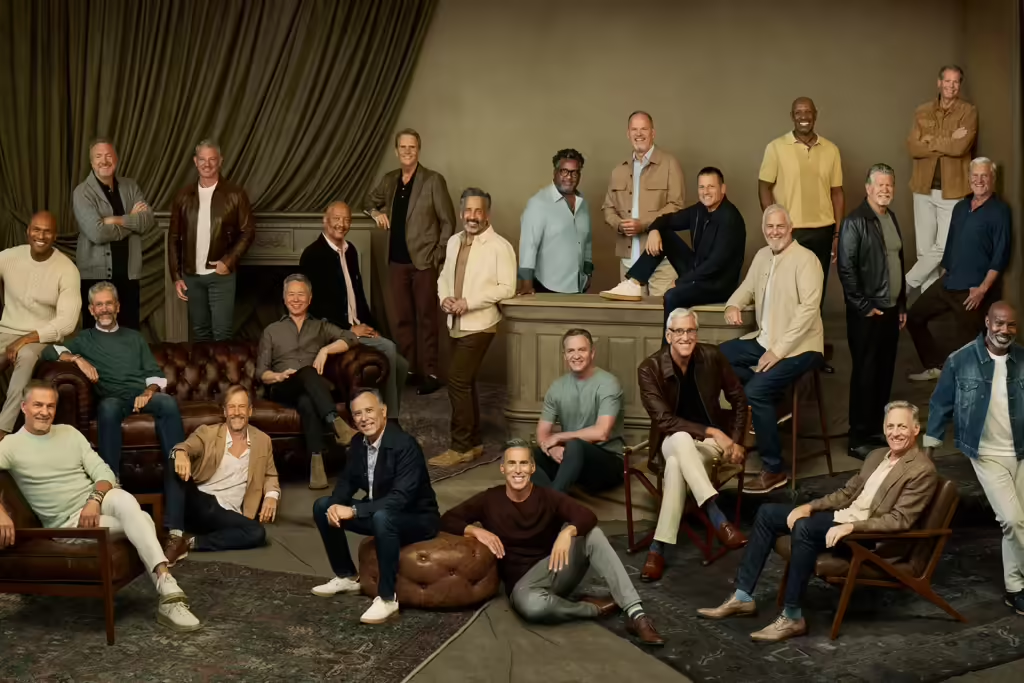
I swore I’d never watch The Golden Bachelorette. For years, I’d made The Bachelor franchise my favorite punchline, poking fun at my wife’s devotion to it. To me, it seemed like a carnival of superficial drama, manufactured tears, and fake roses. While she watched, I’d roll my eyes and retreat to another room, convinced I was too evolved for reality TV. But then a friend challenged me: “You’ve got to watch The Golden Bachelorette. It’s different.” I resisted at first, brushing it off as nonsense. Yet curiosity got the better of me, and I caved. Except, I wasn’t ready to admit it. I started watching in secret. Like a teenager hiding a guilty pleasure, I’d turn it on when my wife wasn’t home and quickly switch it off if I heard her walk in. I was hiding The Golden Bachelorette like it was something far more scandalous. Why the secrecy? Maybe it was because I didn’t want to admit I’d judged her so harshly. Maybe it was because I didn’t want her to know I’d been wrong. Or maybe it was because I wasn’t ready to face what the show might reveal about me. The truth is, I don’t think I was wrong about The Bachelor and The Bachelorette. But The Golden Bachelorette? That’s a different story entirely. What Makes The Golden Bachelorette Different Unlike its younger counterparts, The Golden Bachelorette isn’t about Instagram fame or petty rivalries. It’s about men in their 50s and 60s who’ve lived full lives—men who have experienced heartbreak, loss, and the kind of hard-earned wisdom that only comes with age. These men aren’t competing to win; they’re seeking connection, intimacy, and belonging. As I watched these older men navigate their relationships, something unexpected happened. I began to see reflections of myself—my struggles with vulnerability, my desire for connection, and my ongoing quest to redefine what it means to be strong. Watching these men open their hearts wasn’t just compelling. It was transformative. It reminded me of the very transformations I’ve witnessed in the men I coach through Man UPrising. From Armor to Open Hearts One of the greatest joys of my life has been watching strong, successful men step into a Man UPrising group. These men arrive guarded, carrying the scars of countless battles fought in careers, families, and friendships. They bring the same shields that have protected them in boardrooms but also left them isolated, burdened, and unseen. But something remarkable happens in those groups. Over time, I watch their armor crack and their walls lower. By the end, these same men leave transformed—open-hearted, compassionate, and deeply connected to themselves and others. I know this journey intimately because I’ve lived it. The Cost of Armor I’m an Enneagram 8, known as “The Challenger.” My life has been defined by relentless drive, an iron will, and a deep-seated belief that toughness equals strength. That energy has propelled me through professional successes and personal challenges. But my “armor”—the anger, the need to control, the refusal to show weakness—came at a cost. My wife, lovingly (and sometimes not-so-lovingly), calls me the “8-hole.” Anger has always been my first reaction—a fire I’ve worn like a badge of honor. For years, I believed that wall of anger and toughness was proof of my strength. But I’ve come to realize that the same wall that kept me safe also kept me stuck. With my wife, I became unreachable. She’d tell me she couldn’t find me beneath the layers of my walls. With my kids, I jumped to fix their problems rather than listen to their hearts. With friends, I used humor to deflect vulnerability, sidestepping real conversations in favor of easy laughs. The truth is, my so-called “strength” was rooted in fear—fear of being exposed, of not being enough, of being seen as weak. The Power of Vulnerability It wasn’t until I stepped into my Man UPrising journey that I began to understand what true strength looks like. In these groups, there’s no room for bravado. Advice-giving, a classic move to avoid discomfort, isn’t allowed. Humor, another common deflection, is gently called out. A subtle tap on the heart reminds the group: “You’re safe here. Let yourself be real.” I’ve seen men—tough, battle-worn men—break open in these spaces. I’ve watched them cry, not out of weakness but out of courage. I’ve witnessed them sit with their fears and insecurities without trying to fix or fight their way out. And when they do, something profound happens. They receive what so many of us long for: unconditional acceptance. Through these men, I’ve learned to take off my own cape and step into the circle as just me—flawed, imperfect, human. Lessons from The Golden Bachelorette And this brings me back to The Golden Bachelorette. Watching older men redefine masculinity on national television struck a chord. These weren’t the posturing, performative men we often see in media. They were tender, open, and willing to fight for connection in ways that had nothing to do with competition. What I saw mirrored the transformations I’ve witnessed in Man UPrising. These men weren’t focused on “winning.” They were focused on love, intimacy, and being truly seen. For once, the masks were off, and it was beautiful. It reminded me of a truth I’ve come to embrace: true strength doesn’t lie in the armor we wear or the shields we hold. True strength is in taking them off. Living with an Open Heart Today, I’m working every day to lead with an open heart. It’s not easy for someone like me, who spent decades relying on toughness to get by. But I’ve learned that vulnerability is the real badge of honor. It’s not just about tearing down walls—it’s about having the courage to keep them down and let others in. The Challenge to All Men To every man who feels stuck behind his own armor, I offer this challenge: let it go. Let yourself be seen, not as invincible but as real. Trust others with your
Guided Meditation: Enneagram and the Power of Gratitude
In this meditation, Baruch HaLevi explores how the Enneagram can be a transformative tool for cultivating gratitude, mindfulness, and deeper connections with loved ones. By understanding each person’s unique strengths and needs, the Enneagram helps navigate family dynamics, especially during the holiday season, fostering empathy and turning potential tensions into opportunities for meaningful connection.
Cultivating Gratitude: An Enneagram Guide to Navigating Thanksgiving

As Thanksgiving approaches, it’s a time to reflect on what the season truly represents: gratitude, mindfulness, and connection. Beyond the turkey and family photos, Thanksgiving calls us to slow down, embrace the present moment, and appreciate the blessings we often overlook. Let’s use this time to cultivate awareness and deepen our connections with those we cherish.
Strengthen Relationships with Gratitude and the Enneagram This Thanksgiving

Baruch HaLevi explores the deeper meaning of Thanksgiving and how to strengthen family relationships in this episode of the Defiant Spirit podcast. He highlights the power of gratitude and mindfulness, while also offering insights into navigating family dynamics using the Enneagram.
Confession of a Retired Rabbi

In the 1950s, IBM looked much different than it does today. Back then, they produced punch-card systems. Exciting stuff.
In fact, the company repeatedly rejected developing computers because the CEO at the time, Tom Watson Sr., thought they were overpriced and unreliable.
9 Lives: A Spiritual Roadmap to the Life You Truly Seek

Welcome back to The Defiant Spirit Podcast! Leadership is a critical aspect of any organization, but it’s often misunderstood or neglected. In this episode, Adam and B explore what leadership is, what makes effective leaders, and how to navigate the roadblocks that create breakdowns in leadership.
How the Nine Enneagram Types Connect with Various Leadership Styles

Welcome back to The Defiant Spirit Podcast! Leadership is a critical aspect of any organization, but it’s often misunderstood or neglected. In this episode, Adam and B explore what leadership is, what makes effective leaders, and how to navigate the roadblocks that create breakdowns in leadership.
Want to Be a Better Leader? Get a New Set of Eyes

In the 1950s, IBM looked much different than it does today. Back then, they produced punch-card systems. Exciting stuff.
In fact, the company repeatedly rejected developing computers because the CEO at the time, Tom Watson Sr., thought they were overpriced and unreliable.
Unpacking True Leadership – Beyond Titles and Authority

Welcome back to The Defiant Spirit Podcast! Leadership is a critical aspect of any organization, but it’s often misunderstood or neglected. In this episode, Adam and B explore what leadership is, what makes effective leaders, and how to navigate the roadblocks that create breakdowns in leadership.