
All You Need To Know About Israel, Hamas & Jew-Hatred

In 5 minutes you’ll learn what you need to understand the situation in Israel, combat the haters and dispel the lies.
The Boy In The Palestinian Flag, Hamas And Dead Jews. It’s Time For You To Choose.

They said they wanted dead Jews. They meant they wanted dead Jews. And now the world has roughly a thousand more dead Jews, thousands more wounded, and nearly a hundred and fifty Jewish elderly, women, and children being violated in the most heinous ways.
The Only Question You Have To Answer To Grow, Be Happy & Free: Are You Response-Able?

“Between stimulus and response, there is a space. In that space lies our freedom and our power to choose our response. In our response lies our growth and our happiness.” -Dr. Viktor Frankl Having guided thousands of people through nearly every twist, turn, and tragedy life offers, here’s what I know to be true. Whether we rise or fall, succeed or fail, live a life of meaning, or waste our time here and do a lot of damage in the process comes down to one question: Are you response-able? No, that’s not a typo. And trust me, auto-correct reminds me daily that it’s not a real word. However, since jawn, gloatware, GOAT, and amalgagender were added to the dictionary in 2023, I think it certainly deserves consideration. Seriously, if this word ain’t a part of your daily vocabulary – it should be. So what is response-ability? Let’s first talk about what it’s not, and for that, we’ll turn to Dr. Viktor Frankl, the man who coined this term. “Between stimulus and response,” wrote Frankl, “there is a space. In that space lies our freedom and our power to choose our response.” The problem, as Dr. Frankl was well aware in his roles as both a psychiatrist and Holocaust survivor, is that the “stimuli” of life, everything from a 1000 trivial stimuli we have to deal with during our days to that terrifying stimulus package that kicks us in our ass now and again, makes it hard to find that space. Stimulus happens, and when it does, we can’t breathe. We can’t think. We can’t shake the fear. We become victims of our circumstances – whatever they are or whoever it is, “causing” us to react, not respond. This is when Frankl challenges us to check in, check ourselves, and challenge our circumstances. Can we get back to consciousness? Can we take back our space? Can we stop reacting and choose our response? Can we respond to our circumstances, however difficult, painful, or tragic they might be? Response-ability is being cut off in traffic and not flipping the perpetrator the middle finger Tweet (oops, guilty, I admit). Response-ability is being exhausted at the end of the day and not yelling at your kids to stop yelling (guilty again). Response-ability is going through an ugly divorce and not throwing away the good memories or shutting your heart to love and loving someone else again. Response-ability is suffering the death of a loved one and then doubling down, living more fully and loving more fiercely, not in spite of your loss – because of it. Response-ability is facing whatever life presents to you and making a choice – the only choice ever fully yours – to forfeit your choice and react, or to take back your power and choose your response? No, it doesn’t mean you’ll do it perfectly – none of us can. No, it doesn’t mean you won’t stumble, falter and fail – you will. No, it doesn’t mean you won’t react – you are human, and reaction is a natural defense. What it means is that once you’ve come off of autopilot, as soon as you wake up to the moment and as quickly as you are able, you’ll pick yourself up, dust yourself off, take back your power, and choose to respond, again and again, and again. So, I’ll end as I began with a single question: are you response-able? Because “in that space lies our freedom and our power to choose our response. In our response lies our growth and our happiness.” If you want to grow and be happy, then choose your response and be free! Dr. Baruch “B” HaLevi Dr. Baruch HaLevi is the founder of The Defiant Spirit: counseling, coaching, and consulting. He is a logotherapist (meaning-centered psychotherapist), meaning-coach, and Enneagram teacher. He is also co-founder of the Viktor Frankl Meaning Academy. You can learn more about him at www.DefiantSpirit.org
What I Learned From Sting – Don’t Die With Your Music In You.
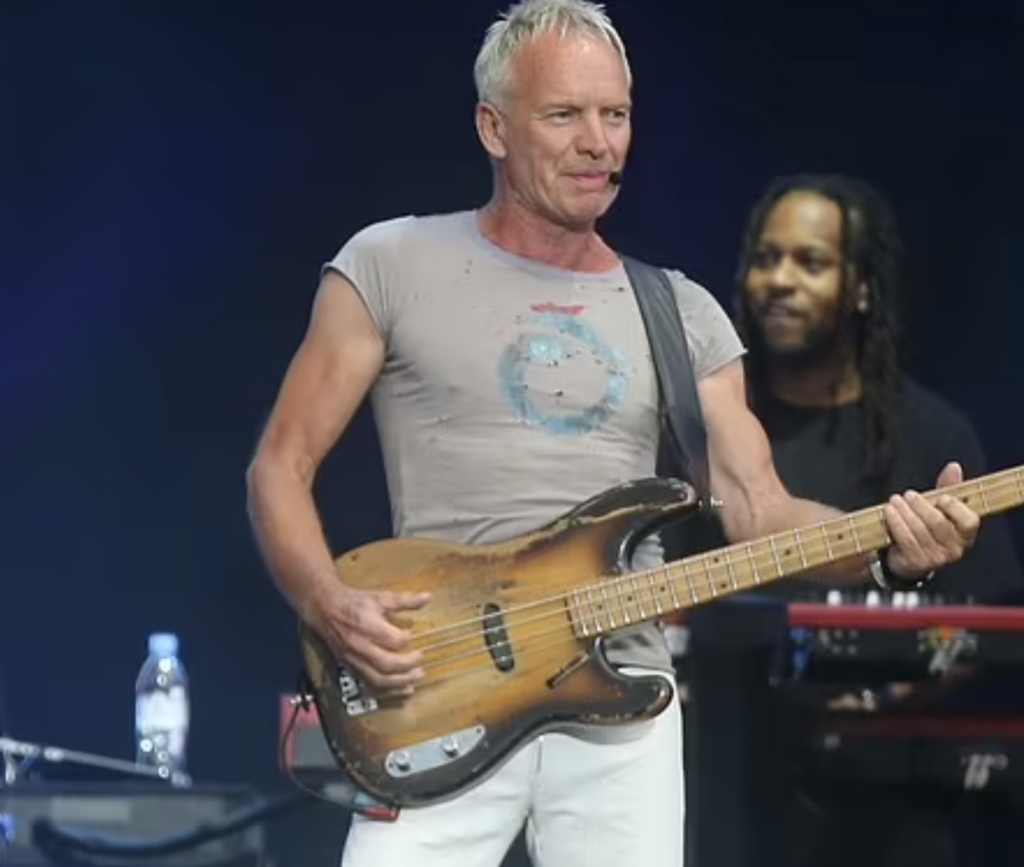
Sting is 71 years old, and the guy still rocks! I recently saw him rocking on stage with guitar in hand, jamming away. Whereas most guys his age can no longer hit the high notes (don’t bother with Daryl Hal), Sting seems to hit them all (even “Roxanne,” which I didn’t think he’d be able to do). Physically, forget about it; the dude has biceps most men half his age would love to have. Honestly, he’s a remarkable guy. And creatively, he’s still writing really good music (though I’m a Police fan, and to me, that’s where his music begins and ends). But most of all, where Sting truly struck me was how he owned the stage and commanded the crowd’s attention. Everything in him has been so masterfully cultivated, harnessed, and aligned with his life’s purpose that you could feel – this is a guy who rocks. And as I was watching him, I just kept hearing the warning of Dr. Wayne Dyer: “Don’t die with your music still in you.” This man’s music is alive and well and will be with us long after he’s gone, which brings me to Sting’s son, Joe. Joe Sumner, Sting’s son, opens his shows. Thousands of people gathered at the glorious Red Rocks Amphitheater, one of the pinnacles of any rocker’s career. Let’s say Joe’s music ain’t Red Rocks ready. Quite honestly, it sort of stings. Look, he’s a lovely guy who seems sweet as can be. He probably should be on a stage, just not this one. Whereas Sting exudes cool and conveys charisma and charm, Joe jumps around in a silly t-shirt, shorts, mediocre voice, and goofball vibe. However, there was one brief moment when it felt like he found his voice, and I could feel his music. It was when he sang a silly and sweet lullaby he had written for his daughter. I envisioned this man being really good in a classroom full of kids. I could see him with his guitar and playful, uncool warmth firing up a room full of kindergarten students. That’s the stage it felt like he belonged on, which would be pretty fitting since Sting left being a teacher to rock. I see this. My wife saw this. I sensed thousands of others saw this. Does Joe see this? I wonder if Joe ever allowed himself to ask what he wanted to do. I wonder if maybe he was pushed into the “family business?” I wonder if he just wanted to make his dad proud, so he picked up the guitar to earn his dad’s approval? I wonder if maybe his journey could be from rocker to teacher, a counter-balance to his father’s journey. Most of all, I wonder if he knows that the more he sang that night, the more it felt like his music was still stuck inside of him. I’m not picking on Joe. I feel for Joe. I hope for his sake I’m wrong. However, I’ve been doing this for long enough to know men hiding their music. After all, every day in my practice as a Logotherapist and Meaning Coach, I coach guys like Joe, who have been jumping around the stage for years. However, unlike Joe, these guys come to me when they can’t jump anymore or continue singing someone else’s (particularly their father’s) song. The dentist I coach hates looking in people’s mouths all day. His dad was a dentist, so he became one. However, he wants to open a hobby shop, as his real passion is vintage toy trains. The businessman who talks to me about his dream to paint…. The therapist who always wanted to be an entrepreneur…. The guy who retired and hates spending his days playing golf when he longs to volunteer at a NICU and be a “cuddler,” holding babies born to drug-addicted mothers… The list of Joes goes on and on, and my advice to them is all the same. I don’t tell them what to do. I don’t choose for them where to go. I support them with one message said and embodied in 100 different ways. Whatever you choose to do, do not die with your music still inside you! That is a reminder not only for Joe but all of us average Joes – do not die with your music still inside you!
Discovering David In The Mangled Marble And Realizing You Too
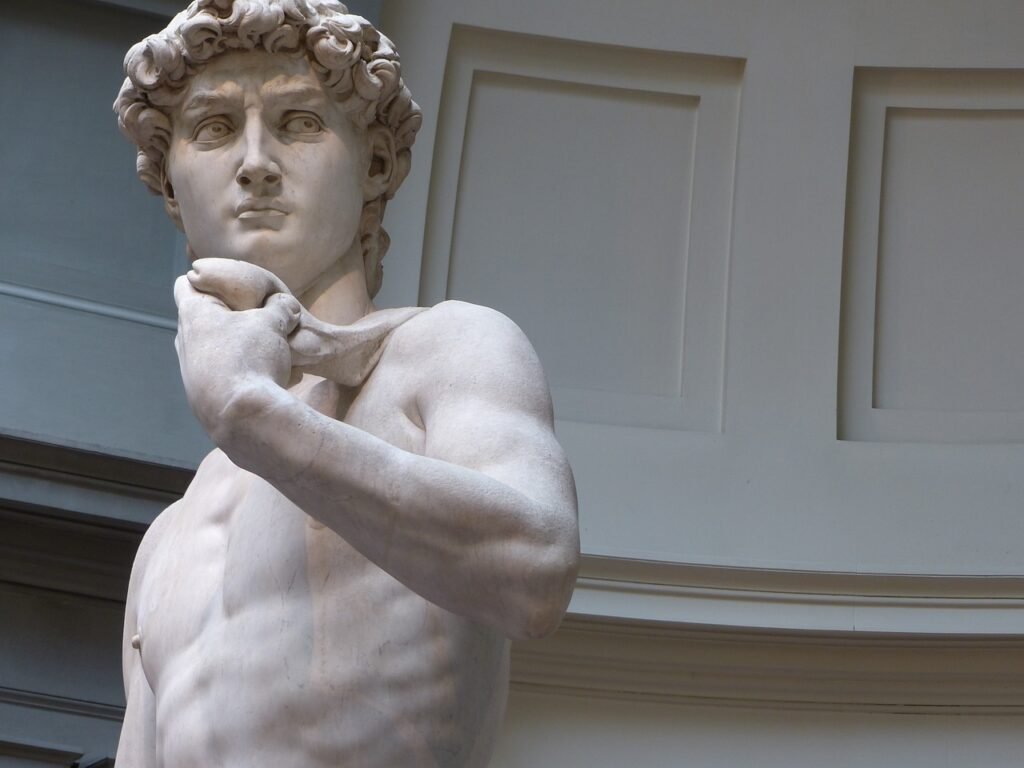
As legend has it, Michelangelo carved the famous statue of David out of a piece of marble discarded by other sculptors. Why did others discard it? Because it appeared to be an inferior piece of marble: stained, broken, unworthy, and beyond salvation. But they were no Michelangelo. This man’s mastery lay not only in skills but in how he saw the world. Years later, when asked how he created this masterpiece out of marble others had discarded, he responded that he didn’t create David. On the contrary, he simply saw David in the marble and then proceeded to chip away everything that wasn’t David. You don’t make a masterpiece. Instead, you remember it, return to it, and realize it waiting for you deep in the marble. That is mastery! Fine, so you aren’t a marble sculptor, but make no mistake about it: you are sculpting your life. You’ve been discarded, or discarded yourself, or significant parts of who you are and pieces about you that you don’t like. Of course, you’ve wanted to change who you are – we all have. Certainly, you’ve tried to fix this or that about yourself – who hasn’t? Undoubtedly, you’ve longed to become someone else at times – we all do. When this happens, remember the teaching of David. You can’t change who you are. You don’t need to fix what is broken. You must never try to be anyone else. All you have to do is… Remember: remember who you are Return: return to what you are Realize: realize your essence, your true self, waiting for you underneath that broken and battered marble you’ve accumulated in your life. This is why and how I use the Enneagram. The Enneagram, often presented as a personality typing system comprising 9 personality types, is misunderstood. Yes, there are 9 personality types. Yes, one of them describes how you move through the world. However, that isn’t who you are. You are not a number. You are not a type. You are not all that broken marble on the surface of your life. No, the Enneagram simply presents us with all the marble, the junk, and the fears we’ve accumulated throughout our lives. It simply shows us where we’ve become lost underneath it all. It presents us all the hidden strategies we’ve cultivated to hide beneath the surface. However, it also shows us how to chip away at that marble. It presents a roadmap for how to find our way underneath those layers, remember who we are, and begin the journey of returning, not becoming, to our true self. Remember who you are. Return to what you are. And realize the true you waiting to be discovered within the marble. It’s time to realize the masterpiece that’s waiting to be discovered in you and that’s what the Enneagram will empower you to do. Click here to check out Discover Your Number, a complimentary Enneagram Discovery tool that will show you 9 ways we cover ourselves up, hiding beneath the marble. And it will present to you 9 pathways to chip your way back to the True You.
Say ‘Yes’ To Life In Spite Of Everything

To say yes to life is not only meaningful under all circumstances – because life itself is – but it is also possible under all circumstances.” – Dr. Viktor Frankl I like simple tools and nothing is more simple than this. The word no is a closed syllable. It is terse. It is abrupt, and it shuts down energy. Just ask a toddler to put down the lollipop and eat the broccoli instead, and you’ll hear it loud and clear – ‘no.’ That’s the end of that. Saying ‘no’ is a natural reaction, particularly when we are scared. We say no as a form of protection. We say no as a way to defend ourselves against the unknown. We say no to create a sense of predictability and certainty that on the other side of whatever it is we are facing, enduring or fearing we’ll be safe. However, saying no to our circumstances, to our future or to our lives has deep and destructive consequences. Sure, we need to say it at times. However, if we say no long enough, it’s not just our mouth that closes, but our minds and our hearts follow suit. There are the little nos: There are the big nos: Yes, ‘no’ may save us in the moment, but if we say it for long enough, it will ruin us in the end. You know someone who says ‘no’ too readily and too frequently. You can feel their closed-off energy, their closed-down worldview, and their closed-up life. That’s just the consequence of a life of life of no. However, there’s a simple way to defy ‘no,’ another one-syllable word. That word is YES! Say it right now, yessss…. It embodies what it is. Whereas no is closed, yes, just rolls on and on. Yes is, quite literally, an act of defiance. It forces your mouth to open, your mind to expand and your heart to burst forth when everything within you says shutdown, close off, and just say ‘no.’ When you find yourself stuck in a rut… When you come to one of those crisis crossroads… When you feel yourself slipping into the darkness, despair or default mode of, yet another, ‘no’ just remember this: You don’t have to know the way forward. You don’t have to have it all figured out. You just need to break the cycle, defy your reaction, and in the words of Dr. Viktor Frankl, “say yes to life, in spite of everything.” Say YES to life and live.
Find Your Way Forward Using The Enneagram

For Anyone Seeking A Way Forward In Life Here’s something I have learned over the years: counseling and coaching people. Everyone seems to think they are the only ones who don’t know what they’re doing. Seriously, a young husband confides in me that he’s not ready to be a father. An older woman shares that she doesn’t know how to navigate divorce. A middle-aged man tells me his father never taught him how to move into the second half of life as a King (listen to my last podcast). But here’s the truth – NO ONE KNOWS WHAT THEY’RE DOING! We were dropped off on a rock in the middle of outer space, spinning around a hot ball of fire and waiting to die. Anyone who says they have it all figured out – they’re lying. That’s why religion evolved and nearly every religion calls its roadmap the same thing. In Buddhism, it is called Dharma. In Taoism, it is termed Tao. In Confucianism, it is known as Dao. In Judaism, it is known as Halacha. In Islam, it is referred to as Shari’ah. And in Christianity, it is called “Via.” What is the literal translation for each of these? The Way. They all are responses to feeling lost. They all convey direction in life. They all, in their way, are roadmaps for finding our way forward. They are all valuable ways to figure out how to live meaningfully on this rock during our short stay. However, the challenge for so many is that these traditional pathways just don’t speak to us. If they do, great, and the Enneagram is not in competition. In fact, it has probably evolved out of Kabbalah, Sufism, and Catholic mysticism. I’m an ordained rabbi and see nothing which would contradict my, or anyone’s, religion. I have only seen it strengthen people’s relationship with their religion. But the facts are that religion is on the decline. Most people I know and guide don’t have a religion they call home. Or, if they do, it is in name only, but hardly a roadmap for navigating their way forward. And yet, returning to that man getting married, that woman getting a divorce, or that guy trying to figure out what it means to live the second half of his life – we still need direction. We all need a roadmap, and in my 30 years of studying and practicing all kinds of roadmaps, none is more insightful and impactful than the Enneagram. It speaks to the religious. It connects with those who are secular. It offers spiritual insight. It makes intellectual sense. It unites. It does not divide. And above all else, it is a roadmap that works. It provides us a WAY forward, and if you haven’t yet explored this way, jump over to my new, complimentary offering: Discover Your Number and check it out. Blessings on your Way, whatever way that may be. Dr. Baruch “B” HaLevi
Outrageous Faith Even If You Don’t Believe In God

Since the beginning of time, human beings have turned to faith, religion, and spirituality as a refuge during the world’s storms, a pathway through personal struggles, and a roadmap to navigate when life’s darkness descends. Today, however, when we find ourselves, individually or collectively, within the storms, many of us (perhaps the growing majority of us) are left feeling alone, adrift on the ocean without a religious connection, a divine direction, or a ship to call our spiritual home. Traditional religion feels dogmatic, legalistic, and outright stifling – so we discard the old ways for new age . New Age spirituality and the quest to avoid dark emotions and rush to embrace love and light, feels contrived, unrealistic, and simplistic. More drifting. More loneliness. More wandering without a direction, faith, or a spiritual home. Personally, I’ve wandered through the landscape of love and light spiritual-lite alternatives. I’ve also sat stifled within the narrow confines of traditional religion, unable to breathe or believe. I’ve lived with it all. I’ve lived with none of it. Ultimately, what I wanted, needed, and have returned to is neither all nor nothing. Instead, I have taken back some of it – the authentic pieces, the open-hearted parts, the inspirational places – that I know to be truly divine. It’s taken decades of seeking, searching and wandering, but I have returned to what I’ve known as “outrageous faith”. Outrageous faith is not some simplistic, pietistic, God-fearing faith. Nor is it new age narcissism, darkness-denying-spiritual by-pass faith. Rather… It’s the faith that comes from failure after failure, mistake after mistake. And yet, somehow finding the strength to get back up, dust myself off, and move forward with humility and hope, again and again – this is outrageous faith. It’s the faith that comes from betrayal: betrayed by friends, by colleagues, by family. And yet, still seeking a relationship, willing to be vulnerable, ready to commit – this is outrageous faith. It’s the faith that comes through despair: stripped by the death of loved ones, battered by grief with no end in sight, overwhelmed in loneliness through dark nights of the soul. And yet, still finding meaning, fulfilling a purpose, choosing to live – this is outrageous faith. And it’s a faith that emanates not from fear, but awe; not from desperation, but inspiration; not from guilt, obligation, or expectation, but from an insatiable longing, a wild ecstasy, and a primal desire for divinity – this is outrageous faith. It’s a faith nurtured in exploring ancient mystical texts. It’s a faith that grows through ecstatic chanting, disciplined meditation & heartfelt prayer. It’s a faith sustained by intimate conversation, a conscious community defined by radical hospitality, unconditional acceptance & committed relationships. It’s a hard-won, graciously given, elegant, and edgy faith. And it’s a faith that embraces the dark stuff and celebrates the rage coming out as the only way for the real light to enter and remain. It is real. It is possible. It is yours. If you are ready for an outrageous Faith!
Before You Leave Your Job Read This!

Let’s begin with a story about a guy named Shelly. Shelly was in his late forties. He was a successful businessman, taking his company from a scrappy little startup to a multi-million dollar business. He was married to a beautiful woman, had three amazing kids, good friends, a caring community, and a house with a white picket fence. His life was cliche – the good kind. Then it became the bad kind. Shelly had a midlife crisis. At first, it started with the cliched sports car. Then the cliche became a nightmare as slowly and methodically, Shelly came undone. He threw away his business in search of an elusive, more satisfying profession. He ended his marriage in a quest for a somehow better relationship. He walked away from friendships, community, and religion – all in a vain quest to discover deeper meaning and realize true purpose in his life. Ultimately, Shelly took his own life and died by suicide. He never found his true purpose, but he did hand his beloved family a genuine crisis and tragedy. I was his family. Shelly was my dad. My dad’s death was a tragedy. However, what made this a tragedy compounded was that my dad already had what he was looking for – he just couldn’t see it, couldn’t feel it, and couldn’t receive the opportunities, gifts, and blessings all around him. He was so preoccupied with the idea that his happiness was somehow outside of himself, somewhere out there… out near the pot of gold at the end of the rainbow. If only he could change his circumstances, then he’d feel fulfilled. If only he could find the right profession, he’d know his purpose. If only he could meet the right partner, discover the right community, and stumble upon the right opportunity, then he would discover more profound meaning in his life, realize a greater purpose for his life, and finally be happy in his life. Shelly’s meaning, purpose, and happiness never came, just like it never did for the countless other midlife men and women I have guided over the years, who also make this mistake. In the words of my teacher and mentor, Dr. Viktor Frankl: “For success, like happiness, cannot be pursued; it must ensue, and it only does so as the unintended side effect of one’s personal dedication to a cause greater than oneself or as the by-product of one’s surrender to a person other than oneself.” Over and over, I have witnessed men and women, particularly at midlife, who get the existential itch, more-meaning-itis, and greater-purpose-pains. They have climbed the ladder of success, as it has been said, only to find it is leaning against the wrong wall. They have outward success but can’t seem to internalize it. They are surrounded by so many people yet feel so alone. They have achieved, acquired, and arrived, and yet that damn Talking Heads song keeps ringing in their ears: And you may find yourself behind the wheel of a large automobile. And you may find yourself in a beautiful house, with a beautiful wife. And you may ask yourself, “Well… how did I get here?” Saying to themselves, “My God! What have I done?” So, they set sail for the better job, the better spouse, the better circumstances. And they sail, and sail, and sail. They hit port after port, “looking for love in all the wrong places” – how many songs can I cram in one blog? Eventually, when there’s no more wind in their sails, they drift, and sometimes, like my dad, they sink. But it doesn’t have to be this way; it shouldn’t be this way. Don’t live your life this way. Yes, you need meaning. Yes, you have a purpose. Yes, you deserve happiness. Maybe you will need to change professions. Perhaps you will end up getting a divorce. Possibly you will totally uproot yourself and begin again in one of those exotic ports. But for it to be authentic, to be real, and to be lasting and true, you must… 1. Start where you stand. Take stock of what you have accomplished, and who’s by your side. Stay put. Get your own grass as green as possible before looking over your neighbor’s fence. You might realize the answer is in your own backyard. 2. Go all in. Maybe the problem isn’t them; maybe it’s you. Maybe you’ve been holding back, playing it safe, or protecting your heart. Yes, go for it at midlife, but first try going all in within your life. If it doesn’t pan out, so be it. At least you’ll move on, knowing you gave it all you had. 3. Try believing the success “they” say you have achieved. Try receiving happiness, really allowing it in. Over and over, as I work with the outwardly uber-successful, I realize that, more often than not, they don’t have a production problem – produce more, do more, or be more. Rather, they have a reception problem – they can’t receive the fruits of their labor, the love of their spouse, or the success or happiness that is knocking on their door trying to get in. 4. Shift your gaze from self to other. We are not here for “self.” Freedom is not realized when we cut ties or forgo responsibilities. We are here for others, to give, to love, and to serve. As Dr. Frankl taught, true freedom is not “freedom from,” but “freedom to” fulfill our responsibilities to serve a cause greater than ourselves. 5. Lastly, remember that you have a choice. You always have a choice. And overall, you only have one choice: to choose your response to your circumstances. Stop allowing your inner or outer conditions the power to dictate who you are or determine what you do. You can choose to make a stand, as Dr. Frankl called, “the defiant power of the human spirit,” summoning the deep reservoir of strength and resilience within you to stand your ground, persevere, and do the work of discovering deeper meaning and
A Meaningful Father’s Day Without A Dad

Today is Father’s Day, and we’re supposed to say, “Happy Father’s Day.” However, what do you do when it’s not happy? Guiding men at midlife and onwards who have been battered and beaten up by life and who are searching for deeper meaning, purpose, and resilience in their lives, I’m very aware that today can bring up lots of mixed emotions, and it’s not always happy. Many, if not most, of the men I coach, their fathers are dead. Some are still in grief. For others, it’s been so long that they hardly remember their dad. Some men I work with are estranged from their children, while others were unable, or never presented the opportunity, to have children. Certainly, if you have an idyllic relationship with your dad and he’s here, you should unabashedly and unreservedly celebrate him. If you have children who love and respect you, you should not hold back and bask in your blessings. However, for any of you men who didn’t have the dad you wanted, needed, or deserved… For any of you men who just miss your dad so profoundly or deeply that it hurts your heart… For any of you men who are torn up over the strained relationship, you have with your children…. Or for any of you men who can not, do not, or will not have children… Remember, fathers come into our lives in all kinds of ways. Many of my father figures, like Viktor Frankl, Wayne Dyer, Moses, or Abraham, are men I never met. It’s never too late to seek out a father figure in your life, even if they are no longer alive. You have great men somewhere in your past, in your lineage whom you can turn to in conversation, contemplation, and prayer. And if not, then you’ll find plenty waiting to father you; just find your way to one of their books. If you are estranged from your dad or your kids, or there’s just an impenetrable tension that makes it difficult to be together, those are simply circumstances. You can choose to be a father, embody fatherly principles, and offer unconditional love, even without being seen, even from afar, regardless of your circumstances. Write them a letter and send it. Or write them a letter and save it for them to read after you are gone. That, after all, is what it means to be a dad – to carry the burden, no matter how painful it may be, and never set it down. And for all my guys whom I work with, or anyone of you reading this who don’t have biological children. So be it. Many great men were childless, men like Leonardo da Vinci, George Washington, Nikola Tesla, Rabbi Menachem Mendel Schneerson, Pastor Dietrich Bonhoeffer, and a lot of great monks, mystics, and popes, to be sure. Yet, each and every one of them stood for the principles of fatherhood and embodied them in the way they lived – living nobly, sacrificing greatly, and serving in devotion – bearing their burden, which is what great dads do. No, it may not be a happy Father’s Day. That may not be up to you. However, what is in your power is to make it a meaningful Father’s Day. So, gentleman, regardless of your circumstances, on this Father’s Day, may each of you, my brothers, turn to your dad, or your heavenly dads, or your Heavenly Dad and get the loving guidance and support you deserve. And may each of you rise up and stand in your values, principles, and integrity, persevering and paving the way for all those who come after you – all of whom are your children, and be the father, the true father, that you were destined to become. If you do, it will be a meaningful Father’s Day, and meaning, not happiness, is what every true father seeks!