
THE 13-MINUTE MISSION & THE SILENT SUICIDE EPIDEMIC: WHY NOW

THE 13-MINUTE MISSION & THE SILENT SUICIDE EPIDEMIC: WHY NOW FRANK’S STORY Frank came to me because his best friend killed himself. He didn’t see it coming. There was no addiction, no diagnosis, no dramatic collapse. Just a man with a wife, kids, a job, and plans for the weekend—until there weren’t. When Frank sat across from me, he didn’t look angry. He looked lost.“How could I not have known?” he asked. “How could this happen?” That question hangs in the air for thousands of men across this country every single day. Because every 13 minutes, another man takes his own life.That’s 111 men today. 40,000 this year.More than all the combat deaths from twenty years of war in Iraq and Afghanistan—combined. If they’d died on a battlefield, we’d call them heroes.But when they die in silence, we call it “mental health.”We light a candle. We whisper. We scroll on. OTHER EPIDEMICS If forty thousand men died in combat every year, we’d call it war.If forty thousand men died in car crashes, we’d rebuild the roads.If forty thousand men died from a virus, we’d shut down the world. We already did. When COVID-19 hit, nearly 400,000 Americans died in that first year.We shut down cities. We shuttered businesses. We masked, distanced, and sanitized everything in sight. And yes—it mattered. Those lives mattered. But here’s the part we don’t talk about: since that time, over 800,000 Americans have taken their own lives.The majority were men. No lockdowns.No briefings.No national mobilization.Just silence. THE STATISTICS WE IGNORE 49,500 Americans died by suicide in 2022—an all-time high. Nearly 80% of them were men. That’s 7× more deaths than testicular cancer. Nearly twice as many as homicide (~22,800). Three times more than drunk-driving crashes. More deaths than war, homicide, and natural disasters combined. Add in drug overdoses and alcohol-related deaths, and we hit 186,000 “deaths of despair” in 2022—the majority of them men. Men are dying not from disease, but from disconnection.Not from weakness, but from worthlessness. THE MEANING CRISIS For twenty-five years, I’ve stood in the aftermath of that disconnection—first as a rabbi, then as a grief counselor, and now as a logotherapist and men’s coach. I’ve buried too many sons, fathers, and friends. And I’ve realized this isn’t just a mental health epidemic. It’s what Dr. Viktor Frankl called the existential vacuum—the emptiness that comes when life loses meaning. It’s a meaning illness.A purposelessness epidemic. Frankl saw it in Auschwitz; I see it in men’s eyes every week. When a man no longer feels needed, known, or connected, he goes hollow. He can still produce, perform, and provide—but he can’t feel. We call it depression, but it’s depletion.We call it anxiety, but it’s emptiness.What it really is—what Frankl named before anyone else—is the crisis of meaning. Men haven’t lost their way.They’ve lost their why. THE FALSE CHOICES And look at what men are being offered. On one side, there’s bro culture—the shallow parody of masculinity that equates arrogance with strength, dominance with confidence, and numbness with control. It’s not masculinity—it’s insecurity with better lighting. On the other side, there’s therapy culture—important, yes, but often built for crisis and, frankly, not speaking to men. Women are twice as likely to seek therapy as men. Two out of three therapy clients are female. While women are learning the language of vulnerability, men are still stuck translating. Traditional therapy can absolutely help men—but it doesn’t reach most of them. Not because they don’t care, but because it doesn’t call them forward. It asks them to talk, but not to do. It asks them to feel, but not to forge meaning from that feeling. Men don’t need to be tamed. They need to be tasked.They don’t need coddling. They need calling. THE THIRD WAY That’s why we created Men’s Peer Groups and launched the 13-Minute Mission. It’s not your grandfather’s fraternal lodge.It’s not your grandmother’s sewing circle.It’s something new—something necessary. A structured, sacred space where men rediscover the balance between action and emotion, between discipline and depth, between solitude and brotherhood. Every group runs on a rhythm: Structure — because men need form before feeling. Connection — because men die without belonging. Vulnerability — because men need, and need to learn, how to be open. Accountability — because men respect responsibility. Intimacy — because men need to learn what it means to be truly seen—“into-me-see.” This is the forgotten middle path between chaos and comfort.It’s where the masculine meets the meaningful.It’s where men remember what they’re for. PUSHING BACK THE CLOCK Every 13 minutes, a man dies by suicide. That’s the clock we live by. Our mission is to push it back—to 14 minutes. One more minute. One more breath. One more reason to stay. That single minute equals 2,888 lives a year. That’s 2,888 men who will see another sunrise.2,888 families spared the question, “How did I not know?” 2,888 chances to turn despair into defiance. This isn’t about awareness—it’s about action. Not about fixing men—it’s about forging them. Not about comfort—it’s about calling. WHY NOW Because the clock is still ticking. Because the men are still disappearing—statistically, emotionally, spiritually. Because we shut down the world for a virus, but we won’t even slow down for despair. The 13-Minute Mission exists to awaken men to who they are, why they’re here, and who still needs them.It’s a movement to reclaim purpose as medicine, meaning as strength, and brotherhood as antidote. Frank’s still in my circle. He’s found his voice again, his backbone, his why. And maybe, when the next man starts to fade, Frank will notice. He’ll reach out. He’ll pull him back. That’s how we push back the clock.One man at a time.One minute at a time.One why at a time. THE 13-MINUTE MISSION Defy the clock. Find your why. Save a life. 👉 13MinuteMission.org | MensPeerGroups.com
Defy the Clock: A Big Shift for Men’s Peer Groups
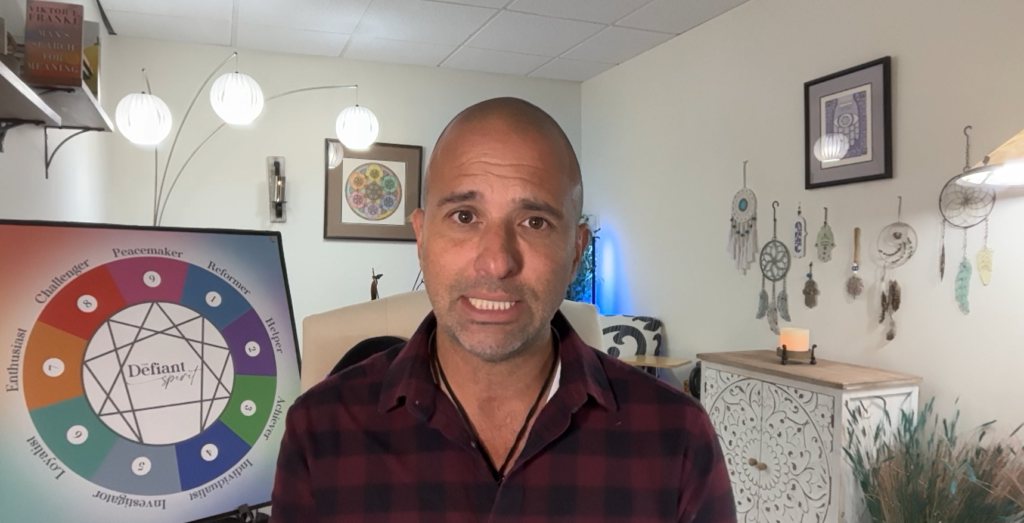
Defy the Clock: A Big Shift for Men’s Peer Groups https://www.youtube.com/watch?v=vZpCqfYASrk I’m thrilled to share some big news with you. As many of you know, a while back we changed our name from Man Uprising to Men’s Peer Groups. Now, we’re completing that transformation—officially becoming a nonprofit 501(c)(3) organization. Why? Because over the past few years of piloting men’s groups, one thing has become clear: we’re not just a business. We’re a mission. Our Mission: Defy the Clock Every 13 minutes, a man takes his own life in the United States. Around the world, the numbers aren’t much better. But suicide is only the extreme expression of something deeper—an epidemic of loneliness, purposelessness, disconnection, and the quiet despair of going it alone. Our mission is simple and defiant:Push the clock back to 14 minutes. That single minute means 2,888 more men alive every year—and countless others who never reach that brink. Because when men live with purpose, connection, and meaning, the world changes. How We Do It We bring men together in community. Through Men’s Peer Groups and Men’s Peer Retreats, we create spaces where men can tell the truth, drop the mask, and discover meaning—not in isolation, but in brotherhood. We’re now running our sixth active peer group (five in Denver, one virtual) and have witnessed life after life transformed. And we’re just getting started. As a nonprofit, we’ll be expanding in two key ways: Partnering with mission-driven organizations—nonprofits, alumni networks, and conscious companies—to bring Men’s Peer Groups to their teams and communities. Growing our online and in-person network so that men everywhere can find what so many are missing: connection, meaning, and belonging. Men’s Peer Retreats We’ve now hosted multiple retreats in the Rockies—three-day, immersive experiences where men gather face-to-face for reflection, ritual, and renewal. These retreats, occasionally including plant medicine, always include one thing: depth. They’ve been nothing short of transformative, and more are on the horizon. The 13-Minute Mission Our broader initiative—The 13-Minute Mission—carries this same purpose forward through storytelling, publishing, and media. The 13 Minutes Podcast and blog explore the question: Why does every man need a why? I’m excited to announce that our first book under 13 Minutes Publishing—The Guy in the Glass: Six Questions to See the Man You Were Meant to Be—will launch in early 2026. It’s the first in a series designed to help men remember, reclaim, and live their why. As Viktor Frankl taught: “He who has a why can bear almost any how.” That’s my why. That’s MPG’s why.To help men—fathers, brothers, husbands, sons, friends—live theirs. How You Can Help This mission is growing, and we need your help to fuel it. Join or refer a man to a Men’s Peer Group. Connect us with organizations that share our vision. Support us through a tax-deductible donation at menspeergroups.com. Share the story—because this isn’t just for men. It’s for everyone who loves them. And for the women reading this: Ariela continues to lead Soul Circles for Women through ArielaHaLevi.com. The work is different, but the purpose is shared—to heal, to connect, to rise. Thank you for walking this path with us—from our early Man Uprising days to this new, clear, purpose-driven chapter. We are building a movement, a community, and a mission to save lives—one man, one minute, one story at a time. Together, we can defy the clock.Together, we can push it back to 14. — Dr. Baruch “B” HaLevi Founder, Men’s Peer GroupsHost, 13 Minutes Podcast bhalevi.com | menspeergroups.com
Remember Who You Are: The Response-Able Man’s Path Back to Purpose

Remember Who You Are: The Response-Able Man’s Path Back to Purpose Men don’t just burn out — they fade out. Not because they fail, but because they forget. Forget who they are. Forget why they’re here. This is how it happens… and how to find your way back. We live in an age of relentless doing. From the moment we wake, we’re told to build, achieve, become. Our worth is tallied in output and outcomes — the money we make, the titles we hold, the boxes we check. For a while, it works. We climb the ladder, accumulate the rewards, and tell ourselves we’re winning. But somewhere along the way, a quiet question begins to whisper beneath the noise: Who am I beneath all this doing? Most men I know don’t have an answer — not because they’ve failed, but because they’ve forgotten. In a society obsessed with becoming, we’ve lost the art of simply being. Forgetting doesn’t happen all at once. It starts quietly: a truth we swallow to keep the peace, a boundary we blur to earn approval, a part of ourselves we silence to belong. One compromise becomes another, and another still, until the man looking back in the mirror is accomplished but empty — admired, yet adrift. We’ve built lives that work on the outside but no longer fit on the inside. And that’s when forgetting turns into reaction. When a man forgets who he is, he stops responding to life and starts reacting to it. Reaction feels powerful — but it’s passive. It’s instinct disguised as choice. We react to what’s in front of us instead of what’s inside of us. We react to the demands of others, even when it betrays our own truth. We react to circumstances, chasing success or escape, until life feels like something happening to us rather than through us. Reaction keeps us alive, but it doesn’t set us free. Animals react. We were not born merely to be natural — we were born to be supernatural; literally, to go beyond our nature and become free. Viktor Frankl called this the defining difference between animal and man — the sacred space of choice, that breath between what happens to us and how we meet it. “Between stimulus and response, there is a space,” he wrote. “In that space lies our power to choose our response. In our response lies our growth and our freedom.” That space is everything. It’s where survival shifts into living, where instinct becomes intention, where a man stops being driven by his nature and starts shaping his destiny. But when we lose connection to that space — when we forget who we are — we end up in exile. Frankl described it as the “inner concentration camp,” a prison without bars where the captivity is real. You don’t see the walls; you just feel them closing in. You’re successful but numb, surrounded but alone, busy but lost. The Baal Shem Tov said, “Forgetting leads to exile.” Exile from what? From your soul. From your purpose. From the man you were meant to be. That’s the quiet tragedy of forgetting: it doesn’t feel like death; it feels like drift. One morning you wake up, look in the mirror, and see your reflection — but not your fire. The good news is that exile isn’t the end. It’s the beginning of awakening. You don’t need to become someone new. You only need to remember who you already are. Michelangelo was once asked how he carved David from a solid block of marble. He said, “I didn’t carve David. I simply removed everything that wasn’t him.” That’s the work — to strip away everything that isn’t you: the masks, the noise, the layers of forgetting. To remember is to step back into that sacred space between stimulus and response. To breathe. To choose again. And that’s when everything changes. When we remember, we begin to respond instead of react. We reclaim the ability to decide who we are and how we show up. We stop letting life happen to us and start living it through us. And as we remember and respond, we begin to return — to our purpose, our integrity, our freedom. We return to the man in the glass, the one we were always meant to be. You’ve spent years doing, achieving, becoming. Now it’s time to remember, respond, and return. Because the man who stops reacting and starts responding doesn’t just survive — he lives. Fully. Freely. Defiantly. That is the Response-Able Man.
Plant Medicine, Father Wounds, and the Tears That Finally Came

Plant Medicine, Father Wounds, and the Tears That Finally Came “It’s all right to cry, crying gets the sad out of you. It’s all right to cry, it might make you feel better.” — Rosie Greer, Free to Be You and Me Yeah, Rosie. I remember. That song is burned into the soundtrack of my childhood — that deep, tender baritone of a six-foot-five NFL lineman telling a generation of little boys that it’s all right to cry. I get it. I don’t think it’s for sissies. Maybe I once did, but I’m of the generation where Rosie Greer indoctrinated us early. Sure, you’d still get pummeled on the playground if you actually cried, but at least there was a whisper that it might be okay. “Sensitive,” I believe is what they called it — though “pussy” is what they meant. It was a new kind of manhood trying to be born — but no one told us how to live it. Okay fine, not every song on that album stuck. William wants a doll — yeah, that was a line most of us weren’t ready to cross. Even Rosie might’ve lost us there. But crying? Come on. Crying was the one line we could’ve stepped over. It wasn’t that big of an ask. We’ve all seen men tougher than us let it out. John Wayne cried — off-camera, sure, but even The Duke had his moments. Ali cried when he lost to Frazier — and again when Parkinson’s started taking his body. Jordan cried when he won his first championship, and again when his father was murdered. Even Stallone, Rocky himself, cried on screen and off. Hell, watch Mike Tyson talk about Cus D’Amato and tell me that man doesn’t know the taste of his own tears. And let’s not forget the soldiers who come home and finally collapse in their kids’ arms — men trained to kill, now undone by love. Real men cry. The ones who’ve seen death, buried brothers, held their children — they cry. Because even the strongest men know what we’ve forgotten: tears aren’t weakness. They’re the release valve. They’re how pressure turns back into peace. And yet so many guys I coach struggle with crying. I certainly do. Some of my clients cry on a dime — and not performatively. It just moves through them like breath. Not me. I want to. I try to. I can feel it rising, and then my body betrays me — the throat closes, the jaw tightens, the chest locks up. I listen to sad songs. I look at nostalgic pictures. I pick emotional wounds and spiritual scabs and — nada. Nothing. Dry tear ducts and dust. A barren riverbed where a flood should be. After my dad killed himself, I couldn’t cry. I knew I needed to, but I couldn’t. The tears were there, but sealed off, like water behind a frozen dam. Occasionally, while jogging, they’d break through — something about running bypassed the brain. Movement cracked open the armor, and for a few seconds, tears would stream down my face. No story. No thought. Just release. But that was the exception, not the rule. All my adult life I’ve struggled with tears. They just rarely come, and without them I feel stuck, blocked, and frankly, like I’m heading down the same dark road as my dad. Nineteen years later — to the day, as I write this — I still don’t shed tears for my dad. Therapy doesn’t get me there. Coaching doesn’t get me there. Not even jogging cracks it open anymore. But recently, I found a teacher who did. He goes by many names — psilocybin, ayahuasca, San Pedro, MDMA, mescaline, cannabis — a thousand sacred plants that have been teaching men how to open their hearts since the beginning of time. I simply call him The Plant. And His power is undeniable — to be respected, even feared — because He ain’t fucking around. This isn’t a hallucinogenic joyride or a weekend escape. The Plant doesn’t hand out bliss; He hands out truth. He takes you straight to the places you’ve spent a lifetime avoiding — the wounds, the blocks, the ghosts you thought you’d buried. He doesn’t anesthetize; He awakens. He doesn’t show you light without first dragging you through your darkness. And if you’re lucky — if you’re ready — He lets you live to tell the story. On a recent Men’s Peer Group retreat deep in the Rockies, I gathered with my band of brothers — nine men committed to real work. And as fate would have it, it was the week leading up to my father’s Yahrzeit — the anniversary of his death. Nineteen years gone. I didn’t plan it that way, but I don’t believe in coincidence anymore. I needed this time. I needed to dedicate it — not to his memory, but to my own continued healing. To face what still lived in me. To confront the father wounds that, truth be told, still bleed. We spent the week doing what I call inner and outer workouts: hiking and plunges, yoga and journaling, breathwork and circles. All of it mattered. But nothing cut as deep or opened me as wide as the Plant. This was a teaching. A reckoning. A face-to-face confrontation with the blocks in my mind, heart, and soul. It wasn’t a bypass. It was a beeline into the pain. Eight hours wandering the woods and every ghost I’d ever buried came to visit. Fear. Shame. Doubt. My father. Always my father. And out there, it hit me — he couldn’t cry. Or wouldn’t. I don’t ever remember my dad crying. Not once. Maybe he did. I’m sure he did. I just don’t remember it. Even when his mother killed herself — nothing. I remember anger. Rage. Sorrow. Regret. But not tears. And I never realized the weight of that truth until I was out there in those dark woods. Until The
Man-Keeping: Why You’re Tired of Raising a Husband
Man-Keeping: Why You’re Tired of Raising a Husband Let’s stop pretending.You’ve been man-keeping. Maybe you don’t use that word, but you know exactly what I’m talking about. He’s your husband, your partner, your guy—but somehow, you’ve ended up being his only friend, his therapist, his cruise director, his one-woman support group. And you’re tired. Hell, you’re exhausted. Here’s the dirty secret most women whisper when the guys aren’t around: men don’t know how to build and maintain friendships. They’re lonely as hell, but they won’t admit it. They don’t call a buddy to talk, they don’t join groups, they don’t prioritize community. Somewhere between adolescence and adulthood, they traded friendships for career, for family obligations, for the façade of independence—and now you’re the one carrying that loss. And let’s be clear: man-keeping might be a new word, but it’s not a new concept. I’ve seen it for generations. My dad’s “friends”? Most were simply the husbands of my mom’s friends—the guys she dragged along and set up on grown-ass man play dates. My grandfather? I’m not sure he had a single friend who wasn’t provided by his social calendar coordinator—my grandma. Women have been organizing, propping up, and keeping men socially alive for decades, if not centuries. The data proves it. In 1990, 55% of men said they had at least six close friends. By 2021, that number collapsed to 27%. Even worse, 15% of men now report having no close friends at all—five times higher than a generation ago. Middle-aged and older men are among the loneliest demographics in America, far less likely than women their age to say they have strong social support outside family. Only 20% of men say they received emotional support from a friend in the past week, compared to 40% of women. This isn’t just sad—it’s lethal. The U.S. Surgeon General warns that chronic loneliness carries the same health risk as smoking fifteen cigarettes a day. And men in midlife are at the bullseye. And it shows up everywhere. How many times have you heard a guy joke, “My wife is my best friend”—like it’s cute? It’s not cute. It’s sad. Having your wife as your best friend can be beautiful—but not if it’s because she’s your only friend. What he’s really admitting, without saying it, is that every other relationship in his life has been transactional. He’ll show up as long as there’s something in it for him—usually business, networking, or a surface-level distraction. He’s got colleagues, golf buddies, poker nights, drinking buddies—but no one he trusts with his actual soul. So he leans on her. For social connection. For his calendar. For “their” friends. She isn’t just his wife—she’s his lifeline. And while the meme makes people laugh, it’s not funny. It’s a neon sign flashing: this man has no real friends. I’ve spoken to too many women in their 70s and 80s who are resentful of this, suffocated by it, living lives far smaller than they should because their husbands never built a world of their own. They became his world, and now they’re stuck carrying the weight of it. And I see it all the time in my coaching practice. Women in their 40s, 50s, 60s sitting across from me saying some version of the same line: “I love him, but he’s shrinking. He doesn’t have any real friends. When he retires, I don’t know what we’ll do. He just clings to me.” They didn’t sign up to raise a husband. And yet, here they are—dragging him along to social events, covering for his silence, filling in the gaps when he has nothing to say. When the kids leave, when the job ends, when the routines of busyness slow down—too many men become shadows in their own homes. And it breaks marriages, breaks intimacy, and breaks the women who have to carry them. Now, let me be clear: I’m not here to bash men. I am one. I’ve lived this, seen it, fought against it. I get why we fall into the trap. Our culture doesn’t teach boys how to sustain deep friendships. We’re taught to compete, to posture, to perform—but not to connect. So, by the time we’re men, we’ve got drinking buddies, golf partners, co-workers—but very few real friends. And when life punches us in the gut—when grief comes, when loss hits, when the walls close in—we’re screwed. That’s why men need peer groups. Not poker nights. Not fantasy football leagues. Not one more shallow distraction that helps us avoid the deeper work. Men need circles of brothers where they can actually show up. Where they can talk about what’s real. Where they can hear “me too” from other men. Where they can stop dumping the full weight of their inner world on their wives. Because here’s the truth: men in peer groups become better husbands. They become better fathers. Better sons. Better brothers. When a man is part of a peer group, he learns to talk—actually talk. He learns to listen. He learns to sit with pain without fixing it. He learns intimacy, not the kind that happens in the bedroom, but the kind that builds everything that happens outside it. I’ve seen it happen many times. A man who used to shut down at the dinner table suddenly opens up. A man who used to simmer in silence finds words for his grief. A man who only had anger or apathy discovers he actually feels joy, or sorrow, or fear. And the women in their lives always say the same thing: “Thank you. Thank you for giving me back my husband. Thank you for giving me a partner who can finally meet me.” Ladies, you’ve been carrying the burden long enough. You’ve been man-keeping, and it’s draining you. Stop raising a husband. Stop being the only one keeping his soul alive. Hand him off to the circle where he belongs. And men—if you’re reading this, listen up. You don’t get a medal for toughing it
Learning to Say the Hard Things: Why Clearing Little Things Saves Our Relationships

Learning to Say the Hard Things: Why Clearing Little Things Saves Our Relationships Men’s Peer Group Tools Series: Clearing Let’s be honest—most men suck at saying the hard things. We swallow it. We bury it. We laugh it off. We say, “No worries.” We say, “I’m fine.” We say, “It’s nothing.” And then we walk away with a smile plastered on our faces while inside we’re seething, hurting, shrinking. That’s not strength. That’s cowardice. And it’s killing our relationships. In Men’s Peer Groups, we don’t let that crap slide. Every meeting starts with a ritual we call Clearing. It’s simple, but it will change your life. Here’s how it works. A man looks another man dead in the eyes and says, “I’m clear with you, John. I’m clear with you, Jim. I’m not clear with you, Juan.” And then he says why. “I’m not clear with you, Juan, because I sent you an email you asked for and you never got back to me. You ghosted me and I felt small.” Then he clears with the group. “I’m not clear with the group because I was late. That was disrespectful to you guys.” That’s it. No novel. No excuses. Just the truth. Sounds small, right? An unanswered email. Showing up late. But here’s the deal—those “small” things are the termites that eat away at trust. Those “small” things become resentment, distance, disconnection. And if you don’t believe me, go look at your marriage, your friendships, your job. There are two ways to kill a relationship. One is obvious: stab it through the heart. Cheat. Lie. Betray. Cross the line in some massive way. That’ll do it. But more often? It’s death by a thousand cuts. Paper cuts. Little things. The text that never got answered. The offhand insult that got brushed aside. The dinner you were late to. The birthday you forgot. The silence after someone poured out their heart. Individually, none of them look fatal. Collectively, they bleed relationships dry. Clearing is the antidote. It’s the practice of pulling resentment into the light before it festers. It’s the discipline of naming the tension so it doesn’t become poison. It’s the courage to say the hard thing before the hard thing blows everything up. But here’s the kicker—clearing isn’t just about saying the hard thing. It’s about hearing the hard thing. And that’s where most men crash and burn. Because when someone clears with you, your first instinct is to defend yourself. “That’s not what I meant.” “You’re too sensitive.” Or to fix it. “Okay, okay, I’ll do better, I’ll change.” Neither is clearing. When someone clears with you, your only job is to receive it. Period. You don’t have to own it. Maybe it’s their stuff. Maybe they misread it. Maybe it’s not “true.” Doesn’t matter. It matters to them. And the fact that it matters to them means it matters to the relationship. So you listen. You breathe. You say, “Thank you.” You say, “I hear you.” You say, “I’m sorry you feel that way. I’ll do better.” Or you say nothing. That’s clearing. It feels awkward at first. It feels unnatural. But it’s not just a Peer Group gimmick. It’s life-saving in the real world. Clear with your wife. “I’m not clear with you because when you looked at your phone during dinner, I felt invisible.” Clear with your kids. “I’m not clear with you because you rolled your eyes at me. I felt disrespected.” Clear with your boss. “I’m not clear with you because you didn’t acknowledge my contribution in that meeting.” Imagine what would happen if men actually said those things instead of swallowing them. Imagine if instead of “No worries,” we told the truth. Imagine if instead of faking smiles, we brought the noise inside us into the open. Relationships would stop dying a slow death. Marriages would stop rotting in silence. Friendships would stop drifting. Teams would stop collapsing under the weight of unspoken resentment. Clearing is hard. It’s vulnerable. It’s uncomfortable as hell. But it’s the only way to build anything real. Because pretending is bullshit. Silence is bullshit. “No worries” is bullshit. Learning to say the hard things—that’s the work. That’s the courage. That’s what turns men into men, and boys playing nice into ghosts. So clear. Say it. Hear it. Receive it. And watch your relationships come alive again.
STOP GIVING YOUR POWER AWAY — AND TAKE A BREATH

STOP GIVING YOUR POWER AWAY — AND TAKE A BREATH Response-Ability Series #2How to Stop Living in Reaction and Take Back Your Power to Choose Your Response Your heart pounds. Your jaw locks. Your breath disappears. The car cuts you off and suddenly you’re gripping the wheel with white knuckles.You walk through a dark alley, hear a noise behind you, and your chest tightens.The plane jolts in turbulence — you gasp, lungs seize, breath gone.A colleague takes a cheap shot in front of the team — heat floods your face, your body clamps down, your breathing clipped to nothing. Different circumstances. Same reaction. Autopilot. Unconscious. Survival mode. The ancient wiring that once kept us alive from saber-toothed tigers now hijacks us when all that’s really happening is traffic, turbulence, or someone’s careless words. But here’s the truth: reaction isn’t choice. Survival isn’t freedom. Autopilot isn’t power. And every time you give away your breath, you give away the little power you actually have. We spend so much of our lives trying to control what we can’t. The weather. The markets. Our bosses. Our kids. Traffic. Airplanes. It’s all bullshit. You can’t control it. You never could. You never will. But there is something you can control. Something embarrassingly simple. Your breath. And yet it’s the first thing we abandon. Which means if you want to live a life of true response-ability, it’s also the first thing you have to reclaim. Viktor Frankl captured it perfectly: “Between stimulus and response there is a space. In that space lies our power to choose our response. In our response lies our growth and our freedom.” That space is where life is decided. Reaction collapses it. Response expands it. And what determines the size of that space is your breath. Shallow, frantic breathing pulls it tight until all you can do is react. Deep, steady breathing opens it wide, giving you the clarity and strength to respond. I see this all the time in coaching. Men want more tools. New books. Deeper teachings. Another framework. Another shortcut. But none of it matters until you master this. If you can’t control the one thing you always carry with you, you’ll never control anything else. It’s not glamorous. It’s not shiny. It won’t impress anyone on Instagram. But it’s yours. And it’s the only doorway into real power: your breath, your attitude, your response. That’s the short list. Guard it like your life depends on it. Because it does. And if you still think breathing is too simple, too boring, too beneath you, then hear this old story. A young student once came to a master, eager to learn the secrets of wisdom, strength, and freedom. The master gave him one simple practice: breathe. Day after day, the student was told, “Return to your breath. Inhale. Exhale.” Finally, the student grew frustrated. “I didn’t come here just to breathe,” he snapped. “I want something deeper. Something profound.” The master said nothing. He took the student down to the river. Without warning, he shoved his head under the water and held it there. The student thrashed, panicked, lungs burning, body screaming. All that mattered was one thing — breath. At the last possible moment, the master yanked him up. The student exploded out of the water, gasping, desperate for air. The master looked him in the eye and said, “When you want to breathe as badly as you just did, then you’ll understand why I keep telling you to practice it. That’s power. That’s life. Nothing comes before it.” That’s the lesson. Breath is not just oxygen. It’s not just biology. It’s the beginning of power, the key to expanding the space between stimulus and response. Every conscious breath is a choice. Every deep breath is an act of freedom. Every time you return to your breath, you step out of reaction and into response-ability. Expand the space through your breath. That’s where your power begins. That’s how freedom is lived. And that’s true power – the power to expand your space through choosing your next breath.
The Politics of Tragedy: How We Weaponize Death

The Politics of Tragedy: How We Weaponize Death From Irina’s stabbing to Charlie’s assassination to Evergreen’s shooting, the bodies aren’t even cold before we turn tragedy into ammunition. Last week was grotesque. Not just because of the tragedies themselves, but because of what came after. It began with Irina, the Ukrainian woman stabbed in the throat in a subway station. A human being—someone’s daughter, someone’s friend—left bleeding out on the ground while her death was captured, replayed, and dissected online. Then came Charlie Kirk, gunned down, his assassination recorded and shared like clickbait. And just when it seemed the week couldn’t be heavier, the news broke of another school shooting in Evergreen, Colorado, where my kids know people directly affected. Three tragedies in one week. But the violence wasn’t the only obscenity. The aftermath was. Before Irina’s body was even cold, the arguments began. This is what happens without justice reform. This is the failure of mental health support. This is what happens because of bail policies. Each side claiming her death as proof, using her tragedy as ammunition. And Charlie Kirk—this is where my ire burns. Because the man was a husband, a son, a father. His two children were there. They saw, in person, what my kids saw on their phones: their father bleeding out, spurting from his neck, while he was doing what we claim to value—engaging in open dialogue. And what followed? Not just shock or grief. Not just disagreement about who he was or what he stood for. I’m talking about celebration. Mockery. Glee. People laughing. People smugly posting, “he got what was coming.” Not trolls. Not nameless extremists in some dark corner of the web. People I know. People in my own network. People who would otherwise pass for “decent.” There is no other word for that than indecent. And then Evergreen. A school. Children running for their lives. Parents waiting to hear if their son or daughter would ever come home again. And before the bodies were identified, before facts were known, the political battle lines were already drawn. Was the shooter MAGA? Was he trans? Each side waiting—almost eager—for the chance to pin it on the other “team”, as if that would make it easier to weaponize. This is what I mean by tragedy compounded. The act itself is horrific. But what follows—the dehumanization, the politicization, the weaponization—that is what corrodes us. And here’s the hard truth: these things will happen again. Irina won’t be the last victim. Charlie won’t be the last father. Evergreen won’t be the last school. No matter how much policy we pass, no matter how much reform we design, there is no perfect society that can inoculate us from human failure. There always have been—and always will be—inhumane and indecent human beings. That part is not a choice. What is a choice is our response. Right now, we are a country in reaction. Political parties in reaction. Citizens in reaction. And far too many of us are reacting in ways that strip us of compassion and drag us straight into indecency. Reaction is fueled by fear, anger, rage, blame, survival. It shrinks us. It hardens us. Reaction drives us to post venom on Facebook, to hurl blame on Twitter, to turn brother into other and harden our hearts. But we don’t have to live in reaction. We can choose another way. Viktor Frankl—who wrote out of the Holocaust—taught that between stimulus and response there is a space. And in that space lies our power and our freedom: the power to choose our response. That’s the invitation. Expand the space. Between a school shooter and the flood of commentary afterward, there is a space. Between a political assassination and the temptation to mock, to gloat, to justify, there is a space. Between a subway rider stabbed in the throat and the urge to immediately turn it into talking points, there is a space. The question is: what do you do in that space? Do you rush to anger? To self-righteousness? To smug satisfaction? Or do you slow down enough to find your heart? To let compassion take root? To let yourself respond instead of merely react? Because that space is where our humanity either lives or dies. And that’s why we created Men’s Peer Groups—to expand the space. To build communities where decency can be practiced. To create circles where conservative farmers and liberal filmmakers sit side by side, where men of faith and men of doubt listen and speak, argue and still respect, learn from one another, and remember what it means to be human together. In a world of echo chambers and silos, this is a place to practice civility, compassion, meaning, and brotherhood. Because in the end, Viktor Frankl was right: “There are only two races, the decent and the indecent.” —Viktor Frankl, Man’s Search for Meaning You can’t choose to make the soul-sucking, shit-show stimuli go away. Atrocities will come. They always have. They always will. But you can choose your response. Choose wisely. Choose to stand with the decent race.
Through the Looking Glass: Seeing Your Why and Finding the Way Home

Through the Looking Glass: Seeing Your Why and Finding the Way Home Every week, I meet people who are in motion but not in direction. They’re busy, productive, juggling work and family and commitments — but when I ask where they’re going, the answers blur. Not where they’re headed this week. Where they’re headed in life. And every time, I think of the Cheshire Cat. In Chapter 6 of Alice’s Adventures in Wonderland, Alice asks: “Would you tell me, please, which way I ought to go from here?” “That depends a good deal on where you want to get to,” said the Cat. “I don’t much care where—” said Alice. “Then it doesn’t much matter which way you go,” said the Cat. “—so long as I get SOMEWHERE,” Alice added as an explanation. “Oh, you’re sure to do that,” said the Cat, “if you only walk long enough.” That’s it, right there. You can walk long enough and you’ll get somewhere. But somewhere isn’t home. Somewhere isn’t purpose. Somewhere isn’t the life you were meant to live. As Earl Nightingale once said, “The road of somewhere leads to the town of nowhere.” And that’s the difference — the choice between drifting through Wonderland and deliberately crossing the board in Through the Looking-Glass. Not Wonderland — Looking-Glass Too many of us live in Wonderland — chasing the next novelty, the next distraction, the next “wow,” and calling it a life. It’s not wrong to wander, but without a destination, wandering becomes drifting. Drifting becomes circling. And circling is just slow-motion stuck. But Lewis Carroll’s Through the Looking-Glass is a different kind of story. Alice steps up to a mirror and steps through it. Everything is reversed. The rules are strange. Familiar things appear foreign. At first, she doesn’t fully understand what she’s seeing. She’s young, still learning — but this time, she has a destination: to move across the chessboard and become a queen. That’s the difference. In Wonderland, she reacts. In the Looking-Glass, she has a why. She knows where she’s going. The Work of the Mirror The mirror is where the real work begins. In Wonderland, you can avoid yourself. You can keep chasing shiny distractions. But in the Looking-Glass, you’re confronted with yourself — the reversed image, the one that shows you both what you’ve been hiding and what you’ve been missing. Seeing yourself in the glass isn’t about perfection. It’s about truth. You see the contradictions. The scars and the strengths. The mistakes and the meaning. You see who you’ve been, and you start to glimpse who you could be. As I wrote in The Wound Is The Way, sometimes it’s the cracks in the reflection that lead you to meaning, wholeness, and even power. The mirror doesn’t just show the polished parts — it shows the fractures. And often, those fractures are the very place where your why begins to take shape. That’s your compass. That’s your why. And here’s the hard truth: you can’t find your way home until you face that reflection. Until you step through the glass, un-reverse the image, and live in alignment with the truth staring back at you. The Looking Glass, Logotherapy, and the Way Home This is exactly what Viktor Frankl understood — and lived. Frankl survived Auschwitz not through luck, but through meaning. He built Logotherapy on one unshakable truth: when you have a clear why, you can endure and transcend almost any how. Your why is your looking glass. It’s the lens through which you see your life honestly. It’s the coordinates you set on your internal compass. It’s the point of orientation that turns chaos into direction. Think of your why like GPS coordinates. Without it, you can be moving fast, burning fuel, feeling busy — and still be going nowhere that matters. The why is your map, your compass, your North Star. It tells you not just which roads to take, but which ones to avoid. It keeps you from following other people’s maps when you don’t have one of your own. And here’s the thing: home isn’t necessarily a physical place. Sometimes it’s a version of yourself you’ve never met — the one that lives in alignment with your values, your gifts, and your truth. Without your why, you’re stuck in Wonderland, forever chasing novelty and calling it living. With it, you’re in Looking-Glass mode — navigating the reversals, but moving deliberately toward the life you’re meant to live. The Reverse Image Life will reverse on you. The rules will change. What felt certain will flip. Up will be down. The familiar will turn unfamiliar. And when it does, the mirror will show you a version of yourself you may not want to see — the one that’s been drifting, avoiding, or playing small. Our work is to face that image. To understand it. To see the truth without flinching. The mirror doesn’t lie, and it doesn’t flatter. It reflects the gap between the life you’re living and the life you could be living. The Cheshire Cat was talking about your why all along. Frankl’s why was the same — the unshakable reason that gets you through the chaos and into your purpose. And that guy or gal staring back at you from the glass? They are calling you to your why. Calling you to stop circling. Calling you to find your way across the chessboard, to take your rightful place as queen or king, and to come home. The Cheshire Cat wasn’t wrong — if you don’t care where you’re going, any road will do. But if you want to go somewhere that matters — if you want to live anchored in your why — you have to step through the looking glass. You have to meet the person staring back at you. You have to know your why. Because in the end, that’s how you win the game. That’s how you take the crown. That’s how you find your way home.
The Wound Is the Way: How Shattering Leads to Meaning, Wholeness, and Power

What Kabbalah, Viktor Frankl, and Your Broken Heart Know About Becoming Whole It happens to me almost daily. Someone walks through my door—sometimes a man, sometimes a woman, sometimes a high-performing leader, a grieving parent, or a seeker mid-collapse. And within minutes—sometimes seconds—the story starts pouring out. Not the curated version. Not the safe summary. The real story. The gut-punch. The confession. The secret they’ve been holding back, even from themselves. They say things like: “I’m broken.” “I’ve lost myself.” “I don’t know who I am anymore.” “I just want to go back to who I used to be.” And underneath all of it, I hear what they’re not saying: That they believe something is wrong with them… because something went wrong. Their marriage fell apart. Their business tanked. Their health failed. Their God went silent. So they assume the problem must be them. That they’re defective. That something cracked inside—and the only way forward is to be fixed. But I tell them the truth. The truth our world has forgotten. The truth that can shake a person—but also set them free: You don’t need fixing. You need meaning. You don’t need to go back. You need to go through. You don’t need to become who you were. You need to become who only this breaking can reveal. Meet Jimmy Let me tell you about a guy—we’ll call him Jimmy. He came into my office one day, sat down across from me, and within 120 seconds—no joke—his eyes welled up and he said: “I’m broken. I just want to get back to the man I was before.” And I didn’t flinch. I didn’t rescue. I didn’t offer advice. I looked him in the eye and said: “Jimmy… with all due respect… you’re never going back to that man. He’s gone.” He froze. So I let it hang. Then I continued: “That man hadn’t been shattered yet. That man hadn’t walked through this fire. That man hadn’t touched the grief, the truth, the meaning underneath it all. You don’t need to get back to him. You need to meet the man on the other side of this breaking. And guess what? This wound right here—is the entry point.” The Shattering Is the Sacred Everything that’s born, breaks. The universe began with a bang—a violent, glorious rupture. A woman gives birth through the tearing of flesh and the breaking of water. A man becomes who he truly is only after the illusion of who he was gets ripped apart in the mirror. That’s not weakness. That’s transformation. Something breaks. Something bleeds. Something real begins. We live in a fractured world—cracks in our stories, our relationships, our bodies, our beliefs. But what if the shattering isn’t a sign something’s wrong? What if it’s the moment something sacred begins? Because inside the brokenness, there’s more than pain. There are sparks. Not the love-and-light kind. Not the Instagram-spirituality kind. I’m talking about sacred sparks—hidden fragments of truth, purpose, and power. But here’s the deal: You don’t find them by running from the pain. You only find them by going in. Not numbing. Not bypassing. Not slapping a positive affirmation on it. You walk into the ache—eyes open, heart on fire—and start searching the rubble for what’s still alive. Frankl Knew This Too Viktor Frankl—Holocaust survivor, psychiatrist, and founder of Logotherapy—understood this long before the world was ready to hear it. His entire philosophy rests on one fundamental truth: There is meaning inside the darkness. Not after it. Not when the mess is cleaned up. Right in the middle of it. Meaning isn’t what you find once you’ve fixed everything. Meaning is what you discover when your life is in pieces—and you choose to believe those pieces matter. That’s what I call your why. Your soul. Your fire. Your truth. If you want to become whole—not in spite of the breaking, but because of it—you have to go into the wound. That’s where the spark is. That’s where the light got buried. That’s where your soul is still waiting. There Is Nothing More Whole Than a Broken Heart The ancient mystics had a saying: “There is nothing more whole than a broken heart.” Not a perfect heart. Not a polished, presentable, fake-it-til-you-make-it heart. A broken heart. Shattered. Pierced. Split wide open. And somehow—through the surrender, the pain, the fire—reborn. Wholeness doesn’t come from going back. It comes from going in. From picking up the pieces and discovering that every crack holds a spark. Not someday. Not once it’s convenient. Now. Live it. Own it. Let it burn in the center of your being like the sacred flame it is. If You’re in the Shattering Now If you’re there now—if you’re where Jimmy was, staring at the wreckage, desperate to rewind—please hear me: You can’t go back. And that’s not a curse. That’s a calling. This heartbreak, this death, this unraveling— It’s not the end. It’s the threshold. The wound isn’t proof you’re off course. The wound is the course. So go in. Do the work. Stop resisting. Start reclaiming. The pain is real. But so is the meaning. So is the spark. So is your why. There is nothing more whole than a broken heart. Because the broken heart has walked through fire—and come out not untouched, but true. Not flawless, but integrated. Not shiny, but sovereign. You’re not here to return to baseline. You’re here to rise. Not by avoiding the wound. By entering it. That’s where your soul lives. That’s where your why begins. With strength, Baruch “B” HaLevi Founder, Men’s Peer Groups www.menspeergroups.com | www.bhalevi.com P.S. If you’re ready to walk into the fire—not alone, but surrounded by truth-tellers, fire-walkers, and fellow seekers—reach out. A new wave of Men’s Peer Groups is forming now. This is where we rise. Through the wound. Together.