
5 Steps When Standing At The Crisis Crossroads
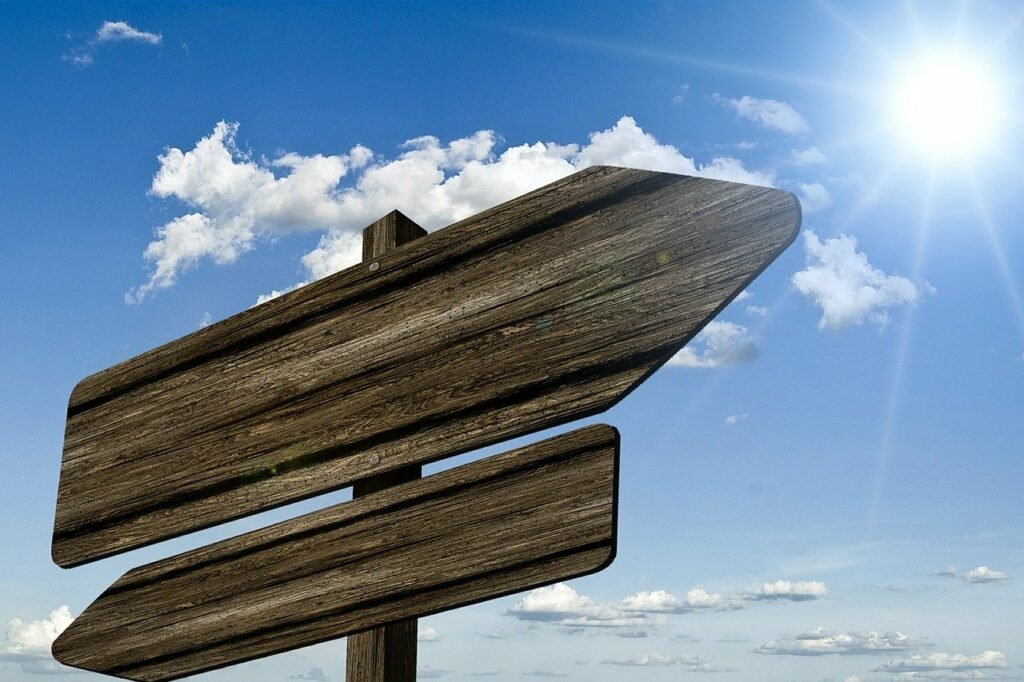
Everything can be taken from a man but one thing: the last of human freedoms—to choose one’s attitude in any given set of circumstances, to choose one’s own way.” – Dr. Viktor Frankl Sooner or later, you will experience what I know as “the crisis crossroads,” or what I’ll also refer to as one of Life’s Ts: a transition, test, trial, trauma, or tragedy. What you call it doesn’t matter; you know it when you are at one. I have been there many times in my life, and as a Logotherapist (meaning-centered psychotherapist) I spend my days working with people at every crisis crossroad imaginable. “What do I do?” My clients will typically ask me. “Tell me where to go?” They will often plead. However, I can not tell them the specifics of where to go, as it is their unique journey, nor can I prescribe an exact formula, as their crossroads is a one-of-a-kind experience. I can tell them and work with them on the following five areas everyone, at every crossroads, needs to navigate. These are the five steps that are the foundation of a program and philosophy I have created called, “Choose Your Own Way,” based on the teachings of a Holocaust survivor, founder of Logotherapy, and author of “Man’s Search For Meaning.” Whatever crossroads you face–from divorce to death and dying, from professional chaos to personal crisis, from chronic struggle to acute suffering–here is what you need to choose your way. Step 1: Choose To Make Your Stand The crossroads, by definition, leave us feeling helpless, powerless–even hopeless. We’ve never been here before. No one told us we’d arrive at such confusion; we were never prepared to handle such chaos. We don’t know what we are doing, where to go, or how to proceed. We are scared and in fear, and we react when the fear sets in. That is to say, whatever action we take when based on fear, always and inevitably sends us in the wrong direction, takes us down the wrong path, and leads to more destruction, suffering, and setbacks. This is why we must first stop: stop rushing, stop pushing, and stop reacting. In the words of my teacher, Sylvia Boorstein, “Don’t just do something; sit there.” Stop. Breathe. Get centered. Make your stand. It takes courage to stand quietly, calmly, and patiently at your crossroads. However, if you react your way forward, make no mistake. You’ll eventually have to come back to the crossroads and do it over, having wasted time and energy and probably doing some damage along the way. So begin by starting through stopping; move forward by first getting still and making your stand. Step 2: Choose To Feel Next, we live in a world that teaches us to “fake it till you make it.” The problem, however, is that we often don’t make it, yet keep faking it… and faking it and faking it. Not only do we fail to navigate our crossroads, but in the end, we live our lives feeling like a fake. Instead, the crossroads invites you to finally be honest and fully become authentic, truthful, and real. It is also an opportunity to discard other people’s goals and society’s rules. To hell with the pretty, polished Facebook facade. In the words of an ancient kabbalist, “There is nothing more whole than a shattered heart.” Your shattering is your beginning. It may not be pretty, but it can be beautiful. No matter what you are facing, feel your broken heart, as a pathway to becoming more, to becoming whole, and to finally becoming real. Step 3: Choose The True You The crossroads always have one thing in common: whichever one you have come to, they always make us feel that we are not enough. We don’t know what we are doing. We don’t have what it takes to move forward. It is our fault for getting here. The falsehoods and fiction involved with the stories we tell ourselves when left unchecked will become our truth. The truth, however, is that you have everything you need to find your way out of the forest. You–the true you–is the only thing you need to move forward in your life. You have to let go of your false self and discover, trust, and follow your true self. She is in there. He is waiting. You just have to turn to them; they’ll become your north star forward through this crossroads and whatever future crisis is on your path. Step 4: Choose To Transcend Your Self The crossroads turn us inwards, begin to define us, and frankly make us think that this is all about us. We are in survival mode. We can’t think about others. It becomes about me, me, me, I, I, I, all day, every day. Until we break free of ourselves and return to others, we can not find the way forward. As Dr. Frankl teaches, the ultimate human act is self-transcendence, to transcend our self to serve others. True freedom, as he teaches, is not a freedom from, but freedom to–to others, to something bigger than ourselves, to serve. The way through the crossroads always involves others, and when we are standing at one, we can become more responsible and truly free. Step 5: Choose To Own Your Power Lastly, we not only become responsible at the crossroads but response able to stop reacting to our circumstances and start responding to our lives. When we learn to choose our way through the crossroads, in the words of another Holocaust survivor and Logotherapist, Dr. Edith Eger, we stop being victims and start becoming survivors. “Victims say ‘why me,’ whereas survivors say ‘now what,’” according to Dr. Eger. Now, what do I do when I’m here? Now, what can I do now that I’m here? These crossroads cannot and will not turn me into a victim. I will choose my response. I will choose my way forward. I will choose to choose, my only
Redefining Beauty And Embracing Your Warrior Marks
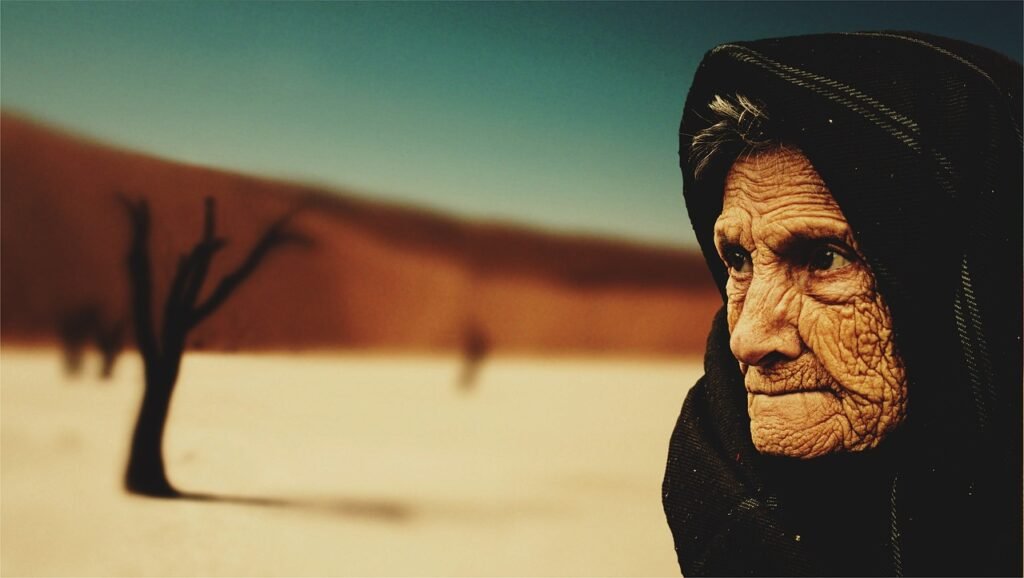
I’m so tired of the way we define beauty. “She is beautiful because she has no blemish or a wrinkle.” “He is beautiful because he doesn’t have an ounce of flab or a single gray hair.” “It is beautiful because it is polished, shiny, and new.” This isn’t beauty. This is empty. This is shallow. This is a lie. And this is destroying us! Our wrinkles, gray hairs, and scars tell the stories of our loves, losses, and deepest yearnings. They are testaments to the battles we have faced, the tenacity we have demonstrated, and the miracle we have survived. A psychotherapist and writer David Richo states, “Our wounds are often the openings into the best and most beautiful part of us.”Our blemishes, scars, and wounds aren’t things to be hidden away. On the contrary, they are what make us beautiful. They are what make us real. They are a testament to having lived life! Years ago, I met a woman named Maxine at a yoga studio. I knew that she was special but couldn’t articulate why. She was probably in her seventies, and she must have been beautiful at one time. But the years had been hard on her. She had many wrinkles; in some places, they were almost deep fissures carved into her face. Her once-black hair was dry and silver. Although she did yoga daily, she was hunched over and appeared frail, almost brittle, as if time had weathered her. Even still, something about Maxine fascinated me. Maybe it was the fact she was the only yogi in the studio who was over the age of forty. Maybe she looked so different from most of her contemporaries: no hair dye, makeup, or Botox injections. Whatever it was, she had an air of regality and an aura of power despite her frail body. I wanted to know what it was. After I attended this class for more than a year, we bumped into each other at a local café and sat down for a chat. It changed not only the way I thought of Maxine but also the way I thought of physical beauty, particularly the lines we have on our faces. Over the next few hours, she told me what anyone would deem a tale of woe. Maxine grew up in a world of privilege. She was wealthy and beautiful. She married a successful businessman and had a beautiful daughter, and everything changed. Her daughter died in a car crash, and her life fell apart. Her husband left her for another woman and, in the process, left her nearly destitute. About ten years after that, she was diagnosed with breast cancer. Maxine’s life would have brought most of us to our knees, and yet our conversation that day wasn’t a tale of woe. I left the café feeling inspired. During our talk, she shared with me the depths of suffering she had endured but met every tragedy head-on. After each battle, she mourned, healed, and moved forward. Although we hardly talked after that encounter, other than the usual pleasantries when we passed the yoga studio, from that day on, Maxine captivated my heart. I saw her silver hair as a lion’s mane. Watching her in the warrior pose, I understood how she lived as a warrior. Above all else, I no longer saw wrinkles when I looked at her face. I saw warrior marks and have referred to them as such ever since. Every line on her face told a line of her story. Every crevice was a test endured and a testament to a battle she had faced and won. Maxine was radiant and glorious. She taught me that warrior marks are stripes to be earned and lines to be won. She taught me that battle scars aren’t to be hidden away but to be displayed proudly. The world can see the realness of who she is and what she has endured through her warrior marks. Journeying through life will entail blemishes, scars, and wounds of every kind. However, these aren’t blemishes to be hidden away. These aren’t imperfections to be covered up. These aren’t ugly things. They are beautiful. They are hard-earned, courageously endured, battle won. These are badges of honor to be worn proudly, appropriately displayed, and celebrated completely. So before you Botox out that beautiful badge, Before you color that righteous stripe, Before you cover up that line of resilience, STOP! Rethink what is beautiful. Reclaim what is true perfection. Remind yourself and the world that those are not blemishes, wrinkles, scars or wounds – THOSE ARE WARRIOR MARKS. YOUR WARRIOR MARKS. SO, DISPLAY, BE PROUD OF AND CELEBRATE YOUR WARRIOR MARKS!